Why Is My Lawn Dying? A Step-by-Step Diagnostic Guide
Start by checking if your grass is yellow or brown, which can signal nutrient deficiencies or drought. Next, test soil moisture with a probe or screwdriver; if water pools or drains slowly, drainage is poor. Look at the grass blades for disease spots or irregular patches. Dig into the soil near turf edges to inspect roots, noting color and firmness. Finally, examine for signs of pests, such as holes or tunnels. Keep these steps in mind to identify causes, and you’ll uncover what next to do.
Why Is My Lawn Turning Yellow or Brown?

When your lawn starts turning yellow or brown, it’s a sign that something isn’t right. Check for nutrient deficiencies, like nitrogen or iron, which cause yellowing. If the yellowing comes and goes over the year, our guide to why grass turns yellow by season explains the pattern.
Look for patches or uniform color changes. Test soil pH, as improper levels limit nutrient uptake.
Avoid over-fertilizing, and correct any imbalances to restore health and prevent further damage.
Check Soil Moisture and Drainage First
Start by testing your soil’s moisture level using a soil probe or screwdriver. It should easily penetrate the top 4–6 inches if the soil isn’t overly saturated.
Next, evaluate drainage by digging a 12-inch-deep hole in the problem area, filling it with water, and timing how long it takes to drain—aim for about 2.5 cm per hour.
If water remains after several hours or overnight, your lawn likely has drainage issues. You should check for signs of soil compaction or heavy clay that can trap moisture.
Moisture Level Test
Wondering if your lawn has enough water? Push a screwdriver or soil probe into the ground at several spots, both after watering and before the next cycle.
Check soil about 3 to 6 inches deep. If it slides in easily and feels moist, your lawn likely doesn’t need watering.
Resist probing dry, hard soil to identify areas needing moisture.
Drainage Evaluation Techniques
Before evaluating your lawn’s drainage, it’s important to check the soil moisture first. Use a shovel or probe to dig a 12-inch-deep hole.
Fill it with water and observe how long it takes to drain. If water remains after 24 hours, your soil drains poorly.
Measure water levels after 15-minute intervals to assess infiltration speed.
Soil Compaction Signs
Since soil compaction often affects water movement and root growth, it’s important to check soil moisture and drainage first.
Test soil with a shovel or screwdriver; if it’s hard to insert, the soil is likely compacted.
Look for thin, patchy turf, bare spots, or areas that stay wet or dry unevenly.
These signs indicate dense, tightly packed soil.
Look at Your Lawn’s Grass Blades for Disease Signs
To identify signs of disease on your lawn’s grass blades, start by examining the blades closely. Look for small spots, lesions, or irregular shapes with distinct margins. If the pattern is not obvious, work through our lawn disease identification table to narrow it down.
Check for color changes like browning or yellowing.
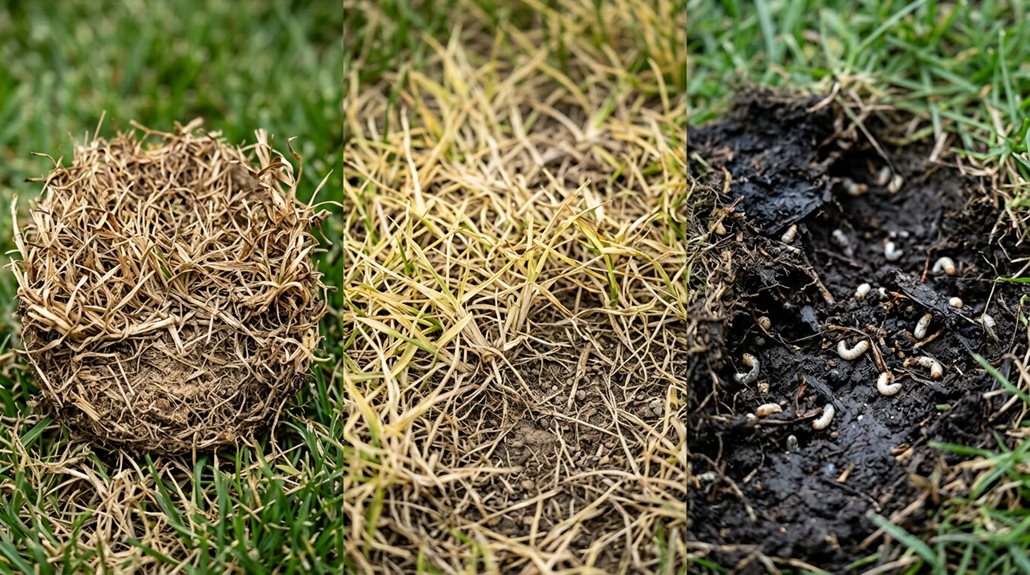
Notice any fungal growth, such as white fuzz or reddish pustules. For circular patches with smoke-ring edges, our brown patch vs drought vs grubs comparison shows how to tell them apart.
Use a handheld magnifier if needed to see tiny signs clearly.
Inspect Roots and Soil Health Carefully

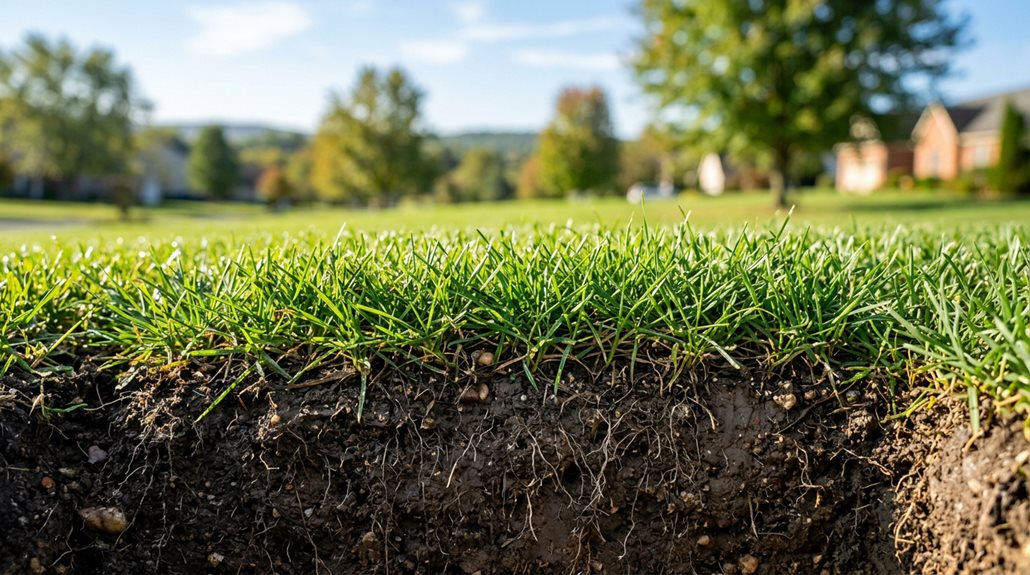
Inspecting roots and soil health requires a hands-on approach. Use a small shovel or core sampler to dig at turf margins, revealing root depth and density.
Check root color—white and firm roots are healthy, dark or mushy roots indicate decay.
Test soil with a screwdriver; easy penetration means loose soil, difficult indicates compaction.
Examine drainage and pH with simple tests or soil kits.
How Do I Spot Pests or Animal Damage?
Look closely at your lawn for signs of pests or animals causing damage. Check for chewed grass tips, skeletonized leaves, or small yellow spots turning brown.
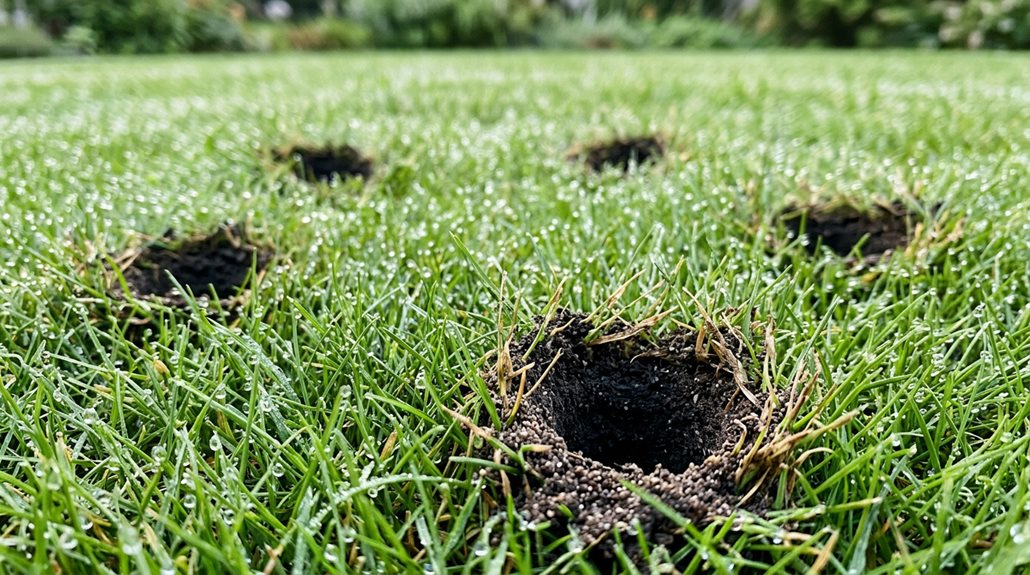
Look for soil mounds, tunnels, or loose sod indicating burrowing animals. Not sure what you are dealing with? Our small holes in lawn guide identifies the usual culprits. Note irregular tearing, gnaw marks, or disturbed turf, especially at night.
Use a flashlight and inspect carefully to identify the source.
Relate Lawn Problems to Recent Care and Environment
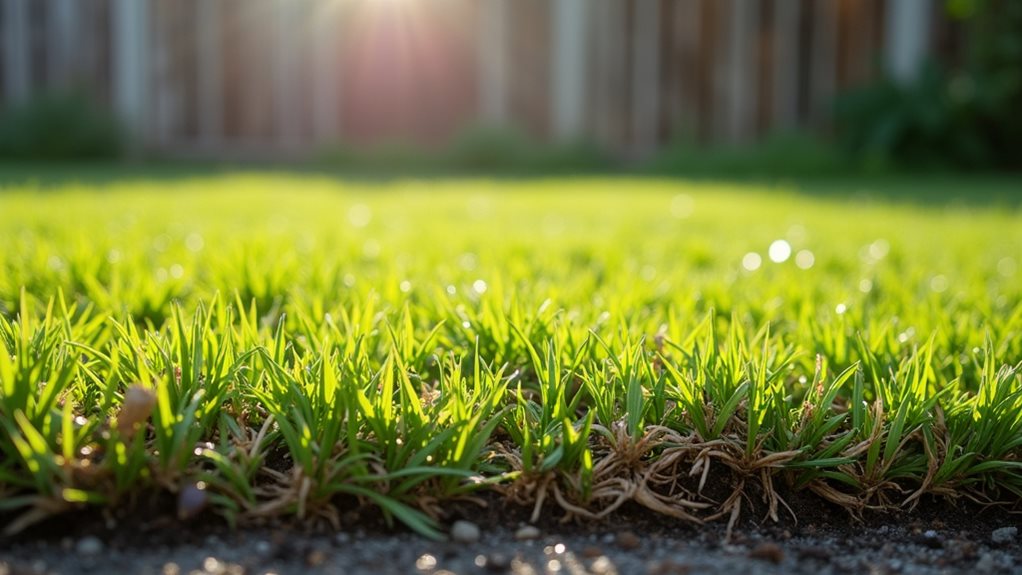
Review your recent lawn care activities, focusing on fertilizer use, mowing, and environmental conditions.
Check if you applied fertilizer at the wrong time or in excess.
Note if mowing was too short or uneven.
Also, consider weather patterns and site factors like drainage or drought stress that might be impacting your lawn’s health.
Recent Fertilizer Applications
Have you recently applied fertilizer to your lawn and noticed problems afterward? Fertilizing at the wrong time is a common culprit, so use our soil temperature fertilizing guide to check your timing. Check for signs like yellow or brown streaks along spreader paths, patches at stops or turns, or leftover granules.
Observe if roots are limp or soil is crusted with salt. Rapid symptoms after fertilizing point to over-application, especially if damage aligns with application patterns.
Mowing and Trimming Practices
Did you know that how you mow and trim your lawn directly affects its health and appearance? Keep mower blades sharp, mow when grass is dry, and follow the one-third rule—never cut more than one-third of the grass height at once.
Adjust mowing height for shade and season, and avoid scalping or uneven cuts. The right mower makes correct mowing far easier; see our best lawn mower for half acre guide. Proper trimming prevents damage and promotes faster recovery.
Environmental Stress Factors
Environmental stress factors are common causes of lawn problems, especially when recent weather or care routines have changed.
If your lawn looks stressed, check for drought, overwatering, or poor drainage. Reduce traffic on drought-stressed areas, improve soil aeration for compacted soil, and adjust watering habits.
Address shade issues by trimming or selecting shade-tolerant grass.
Regularly monitor soil and water quality.
Is It Drought, Disease, or Pests Causing the Damage?
When trying to determine whether drought, disease, or pests are causing lawn damage, start by examining the affected area carefully.
Check for footprints, bluish-green color, and wilting to identify drought stress.
Look for circular patches, spots, or fungal growth for disease.
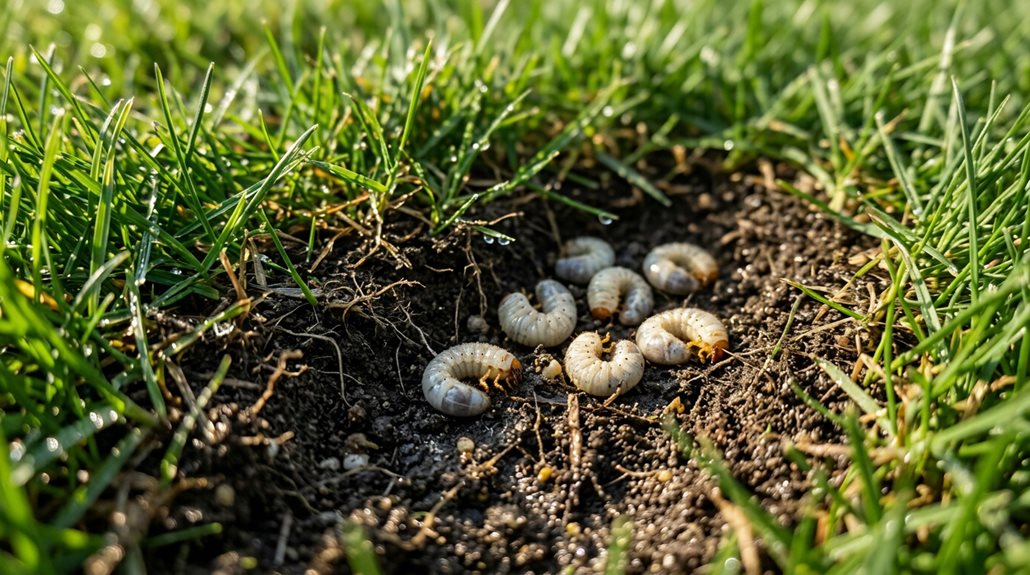
Search for insects or larvae, and test turf looseness or root damage to spot pests.
Use these clues to isolate the cause.
| Symptom you see | Quick test | Most likely cause | What to do |
|---|---|---|---|
| Uniform yellowing across the lawn | Soil pH and nutrient test | Nutrient deficiency or wrong pH | Test soil, correct pH, fertilize on schedule |
| Circular patches with smoke rings | Check for a dark ring in morning dew | Brown patch fungus | Reduce moisture, treat with fungicide if it spreads |
| Spongy turf that lifts easily | Tug test and count larvae under the sod | White grubs | Treat when grub counts pass the threshold |
| Bluish-gray grass, footprints linger | Screwdriver moisture test | Drought stress | Water deeply, raise mowing height |
| Water pools after rain, soggy turf | Drainage hole test | Drainage problems or compaction | Aerate, fix drainage, reduce traffic |
Use the table as a starting point, then confirm with the step-by-step checks in this guide before you treat. Applying the wrong fix, such as watering a lawn with grub damage or adding nitrogen to an active disease, can make the problem worse.
Next Steps: Fixing Your Lawn Based on the Diagnosis
Once you’ve identified the cause of your lawn’s damage, the next step is to develop a targeted plan to repair it. Test your soil and amend pH with lime or sulfur if needed.
Aerate compacted areas, remove debris from bare patches, and loosen the soil. If water pools after rain and the turf stays soggy, fix the yard drainage problems first, before reseeding.
Reseed with appropriate grass, press seeds into the soil, and water consistently. The printable planting calendar lists the best seeding windows for your zone.
Add light compost topdressing to improve soil health.
Sources
The diagnostic steps and symptom checks in this guide follow university extension guidance, checked November 2026:
University of Maryland Extension: diagnose home lawn problems
Frequently Asked Questions
How Can I Tell if My Soil Is Hydrophobic or Compacted?
You can tell if your soil’s hydrophobic by water beading and runoff, while compaction feels hard and resists penetration. Test by watering and observing; easy water absorption suggests compaction, but beading indicates hydrophobic conditions.
What Are the Early Signs of Fungal or Bacterial Lawn Diseases?
You’ll notice white cottony mycelium, gray mold, or powdery fungal growth on leaves, along with rust-like pustules, greasy spots, or slimy tissue. These early signs indicate fungal or bacterial infections threatening your lawn’s health.
How Do I Differentiate Between Pest Damage and Drought Stress?
You can differentiate pest damage from drought stress by observing patch patterns, turf response, and color. Pest damage appears irregular, loose turf, or ragged blades, while drought causes uniform browning, firm turf, and quick recovery after watering.
Can Improper Fertilization Cause Specific Lawn Problems?
Improper fertilization causes lawn problems like yellowing, browning, or crispy patches from overfertilization, or thin, pale turf from underfertilization. Uneven application can create stripes, patches, or salt buildup, weakening your lawn and increasing pest or disease susceptibility.
What Tools Are Best for Inspecting Roots and Soil Health?
You should use a soil probe or trowel to inspect roots and soil health. A soil test kit helps analyze pH and nutrients, while gloves, a ruler, and a camera assist in recording root conditions and identifying issues effectively.