Printable Planting Calendar: When to Plant by Zone (5-9)
To create a printable planting calendar for zones 5-9, first find your last spring frost date from NOAA weather-station records or your local extension office. Mark this date on your calendar, then identify your zone’s recommended planting windows for cool- and warm-season crops. Use soil thermometers to verify temperatures reach at least 60°F before transplanting warm-season crops, while hardy crops go in weeks before frost danger passes. Plan sowing, transplanting, and harvesting accordingly. Keep your schedule flexible; the sections below walk through each step.
Printable version: download the planting calendar as a PDF. Two pages, US Letter, with blank lines to fill in your own frost dates.
Download the calendar (PDF) Print this page
Why Knowing Your Last Frost Date Is Key to Planning Your Garden
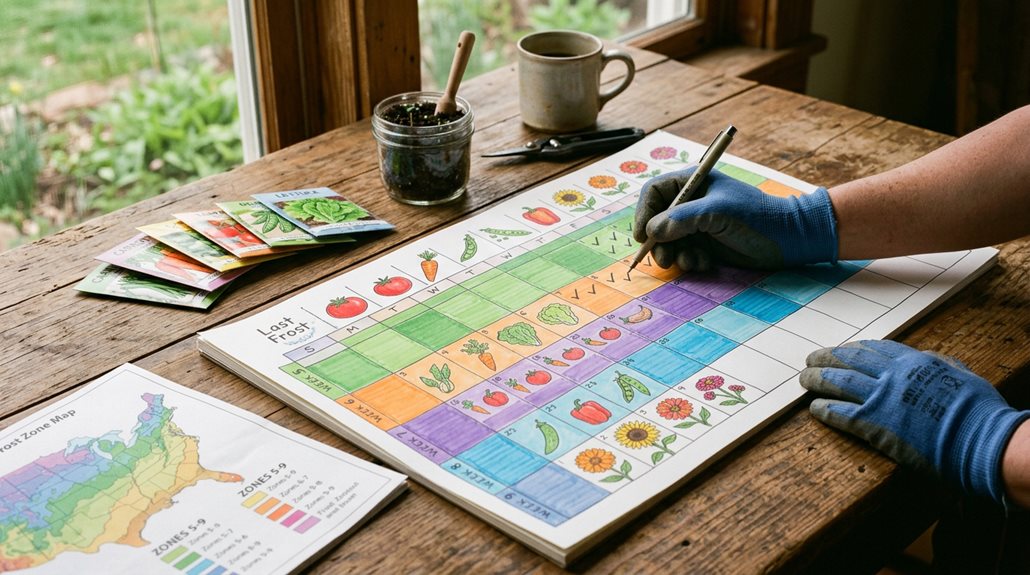
Knowing your last frost date is essential because it tells you the safe window to start planting outdoors. Use it as a guide to avoid frost damage to your crops.
Mark this date on your calendar, and plan to wait until after it to plant frost-sensitive plants. This step reduces risks and improves your gardening success.
How to Find and Interpret Your Zone’s Planting Windows
To find your planting window, first identify your USDA hardiness zone using your ZIP code or a zone map, which tells you how cold your area gets in winter.
Next, check your local frost dates and adjust your planting schedule based on the length of the frost-free season for your zone.
Finally, interpret seed packet instructions and garden calendars to match crop-specific timing, considering your microclimate for the most accurate results.
Determine Your Hardiness Zone
Finding your hardiness zone is a key step in planning your garden, and it’s easier than you might think. Enter your ZIP code into the USDA zone search or click on the map to find your zone.
Use the interactive GIS map for more precise info. Remember, zones are based on long-term winter temperatures, not the coldest single event.
Track Local Frost Dates
Tracking your local frost dates helps you plan your planting schedule more accurately. Find frost dates by checking local extension offices, regional charts, or city tables.
Use the average last spring frost and first fall frost dates for your area. Remember, microclimates and altitude can shift these dates.
Use this info to time planting, transplanting, and harvests precisely.
Understand Planting Seasons
Understanding your planting seasons involves more than just knowing your USDA zone. First, learn that zones measure winter temperatures, not planting dates.
Use crop hardiness info to estimate planting windows, planting hardy crops 4 to 6 weeks before frost, tender crops after.
Read seasons as sequences (early crops in spring, late in fall) and adjust for local conditions like soil and microclimates.
When to Sow and Transplant Cool-Season Crops in Your Zone
To successfully sow and transplant cool-season crops, you need to plan your timing carefully based on your zone. Start by checking your last spring frost date.
Sow peas, spinach, radishes, carrots, and beets 4 to 6 weeks before frost.
Transplant broccoli, cabbage, and cauliflower 2 to 4 weeks before your last spring frost, once seedlings are hardened off; they tolerate light frost. In zones 5 through 9, that usually means March through May. UNH Extension lists broccoli at 2 to 4 weeks before last frost, cabbage at about 4 weeks, and cauliflower at about 2 weeks.
| Zone | Last spring frost | First fall frost | Cool-season sow window | Warm-season plant window |
|---|---|---|---|---|
| Zone 5 | Late April to early May | Mid September to mid October | 4-6 weeks before last frost | Mid May, after frost risk ends |
| Zone 6 | Mid April to early May | Early to mid October | 4-6 weeks before last frost | Early to mid May |
| Zone 7 | Late March to mid April | Mid October to mid November | Late winter to early spring | Mid April onward |
| Zone 8 | Late February to late March | Mid November to mid December | February to March | Early April onward, longer window |
| Zone 9 | Late January to late February | Early December to early January | January to February | Late February to March |
Dates are averages from NOAA frost records. Adjust a week or two for your microclimate, and time fall plantings back from the first fall frost.
Timing Warm-Season Crops: When to Plant in Zones 5 to 9
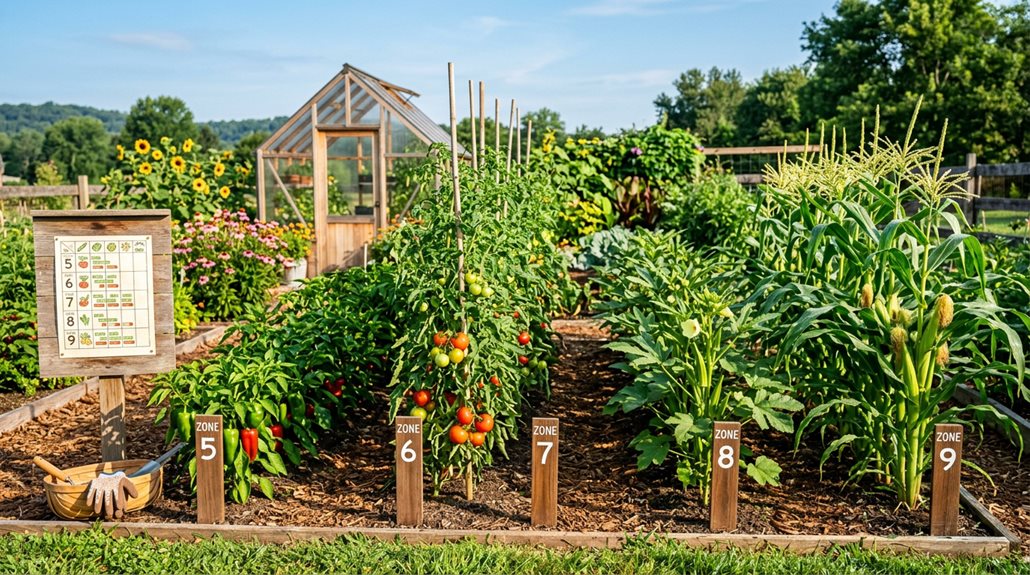
To successfully plant warm-season crops, you need to wait until the last frost date has passed and the soil warms to at least 60°F.
For Zone 5, start transplants 1 to 2 weeks after the frost risk ends, usually around mid-May, and sow seeds directly once the soil is steady and warm.
In Zones 6 to 9, follow similar timing, but you can plant earlier and often have a longer window, allowing for multiple sowings and transplants for a continuous harvest.
Optimal Transplant Timing
Timing warm-season crops for transplanting in Zones 5 to 9 depends on soil temperature more than the calendar date. Measure soil about 4 inches deep in the bed, preferably in the morning, and take several readings over days.
Transplant only when soil reaches at least 60°F, with tomatoes thriving at 65 to 70°F, ensuring stable, warm conditions for healthy growth.
Frost-Free Planting Window
Knowing when your region is free of frost is key to planting warm-season crops successfully. Determine your last spring frost date from NOAA weather-station records or your local extension office.
Wait until after this date, and soil warms to at least 60°F. Use a soil thermometer, and make certain night temperatures stay above 50°F.
Only then, plant your warm-season crops.
Create Your Zone’s Planting Calendar for Better Garden Planning
Creating your zone’s planting calendar begins with understanding your USDA hardiness zone and its specific growing season.
Identify your last frost date and first fall frost, then note the ideal planting times for cool- and warm-season crops.
Use printable calendars or tools to mark these dates, and plan sowing, transplanting, and harvesting accordingly to optimize your garden’s productivity.
How to Adjust Your Planting Schedule for Local Frosts and Soil Temperatures
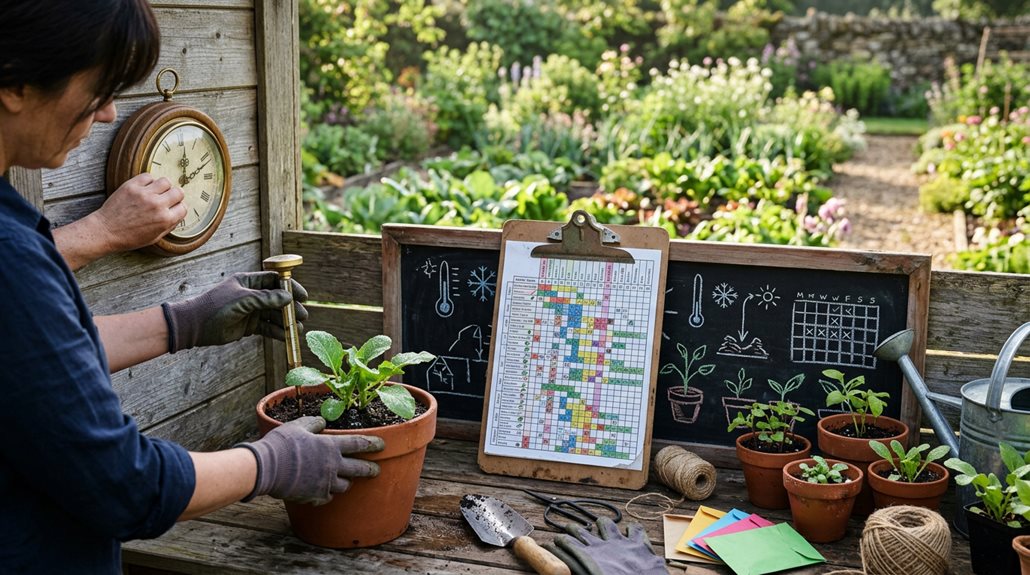
Adjusting your planting schedule to local frosts and soil temperatures begins with paying close attention to your area’s specific frost date.
Use a soil thermometer to check soil temperature at about 4 inches deep daily.
Wait until soil reaches 35-40°F for hardy crops, 50-60°F for moderate crops, and 60°F or warmer for heat-loving plants.
Recheck for accuracy. Soil temperatures also set the right time to feed your lawn; our when to fertilize guide explains the 55/65F rules.
Fall Planting Tips for Extending Your Garden Season
Fall planting can extend your gardening season if you choose the right crops and plan carefully. Select cool-season vegetables like leafy greens and root crops.
Time planting by counting backward from the first fall frost, adding 14 days for safety. Once frost is close, our guide to what to plant in November covers what is still worth sowing. For what goes in the ground this month, see our what to plant in October guide.
Use row covers or cold frames to protect plants.
Mulch and prepare soil to promote faster growth and maintain moisture.
Using Your Planting Calendar to Rotate Crops and Plan Succession Plantings
Using your planting calendar effectively involves careful planning of crop rotation and succession plantings. Map each bed’s history, noting past crops and families.
Assign new crops to different beds each year, avoiding repeats.
Plan succession sowings based on crop days to maturity, timing them every 1-3 weeks for continuous harvests.
Use frost dates for safe planting and rotation.
Tips for Staying on Track Throughout the Growing Season
To stay on track throughout the growing season, establish a regular weekly routine for garden tasks.
Track frost dates and soil temperatures, check them before planting tender crops.
Set a weekly review day to plan sowing, transplanting, and harvesting.
Use prompts and tools like garden apps. The lawn needs its own fall plan; our fall lawn care checklist keeps it in order.
Reassess dates after weather events, and adjust your schedule accordingly to keep your garden on schedule.
Frequently Asked Questions
How Do I Determine My Exact Last Frost Date Locally?
You determine your exact last frost date locally by consulting nearby NOAA or weather station data, considering site-specific factors like elevation and proximity to water, and comparing this info with local gardeners’ observations for the most accurate planting timing.
Can I Plant Outside Before the Official Last Frost Date?
You can plant outside before the last frost date if you check soil temperatures with a thermometer, make sure they’re around 50-55°F, and choose hardy crops. Always monitor weather forecasts for late cold snaps or frost warnings.
How Do Soil Temperatures Affect Planting Timing?
Soil temperatures determine when you should plant because they impact seed germination and seedling success. Warmer soil helps warm-season crops grow better, while cool soil allows cool-season crops to thrive, guiding you to plant at the right time.
What Are Signs of Soil Being Too Cold or Warm for Planting?
You’ll notice cold soil feels wet, stays sticky, and delays germination, with seedlings appearing stalled. Warm soil feels hot, causes rapid drying, wilting, leaf scorch, and discomfort when walking barefoot, signaling unsuitable conditions for planting.
How Can I Extend My Growing Season Beyond Typical Zones?
You can extend your growing season by using cold frames, high tunnels, and hoop houses, which trap heat and protect crops from cold. Adding windbreaks, mulches, and shade cloth further enhances season length and crop success.