White Grubs in Grass: How to Find Them and When to Treat
To find white grubs in your lawn, remove a one-square-foot section of turf using a shovel or trowel, then peel back the grass to inspect the soil. Look for plump C-shaped larvae with small legs near their head and a brown head. Check for signs like yellow patches, spongy turf, or roots that pull up easily. Treat preventively with chlorantraniliprole from mid-April to early June, or with imidacloprid from mid-June to early August, and act curatively from July to October if infestations are severe. The sections below show how to identify grubs, count them, and time each product.
What Are White Grubs and Why Do They Damage Lawns?
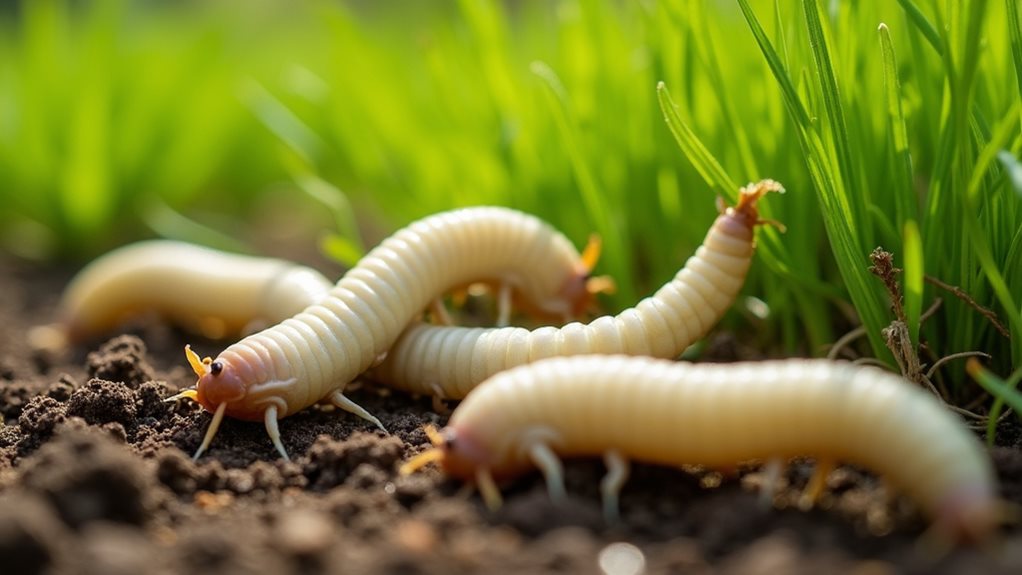
What’re white grubs, and why do they damage lawns? White grubs are the larval stage of scarab beetles that live underground. They feed on grass roots, causing the turf to weaken, turn yellow, and die.
Their tunneling damages soil and dislodges grass, especially during hot, dry weather, leading to patchy, unhealthy lawns that are easy to spot.
How to Identify White Grubs in Your Lawn
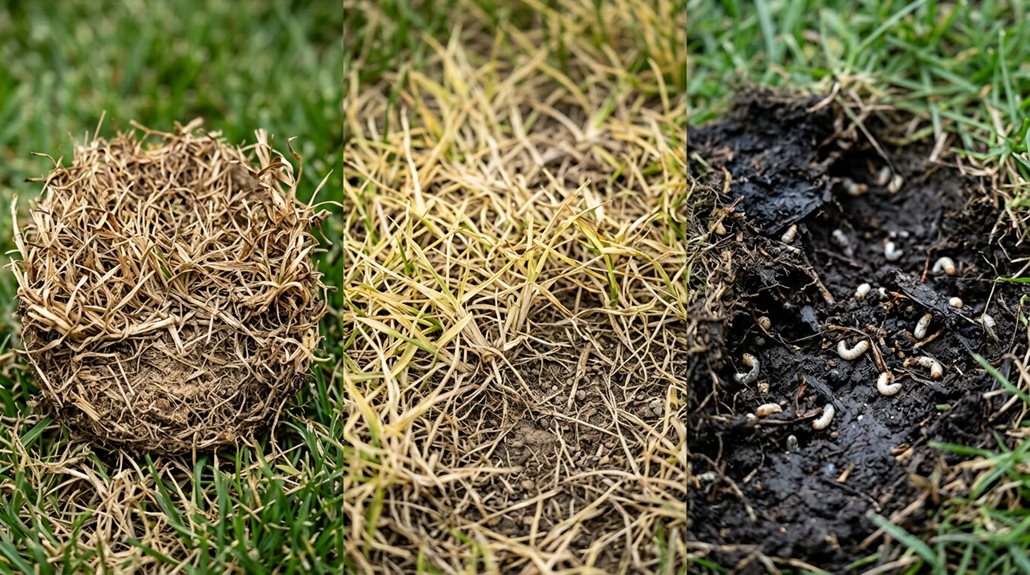
To identify white grubs, start by looking for the larvae, which are plump, C-shaped, and have small legs near the head.
Next, dig a small square of turf about 3 to 6 inches deep, lift the sod, and check the soil and roots for live grubs.
Finally, observe your lawn for signs of damage, such as yellow patches, spongy turf, or roots that pull up easily, indicating potential grub infestation.
Recognizing Larval Shape
You can identify white grubs in your lawn by examining their shape and posture. Look for a soft, plump, C-shaped body, roughly 3/4 to 1 1/2 inches long.
Check for a brown head, six legs near the head, and a segmented, slightly wrinkled body. The curled posture and pale color are key clues to recognizing these larvae.
Inspecting Turf and Soil
Begin by selecting a suitable tool, such as a shovel, trowel, sturdy knife, or cup-cutter, to remove turf for inspection.
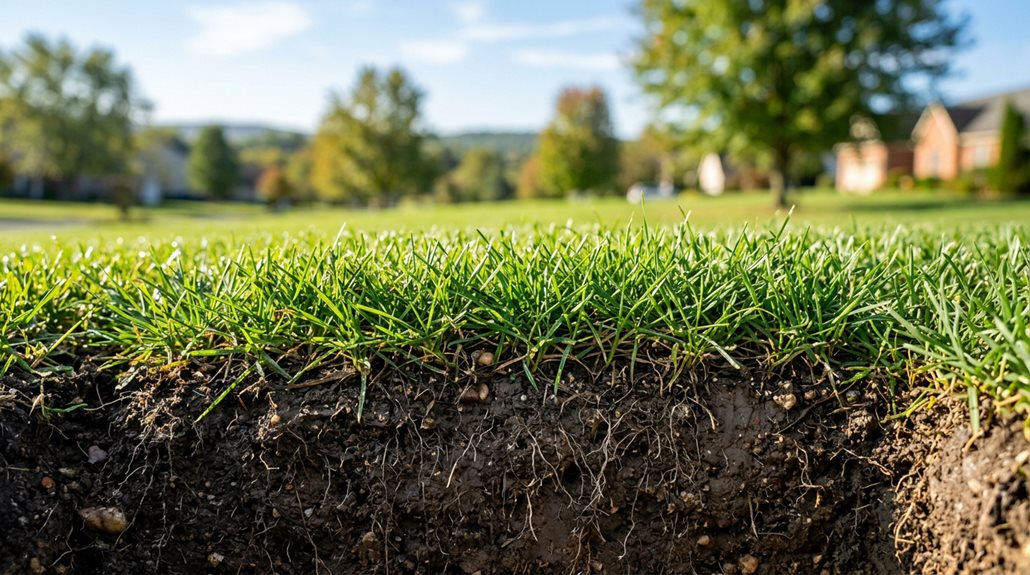
Cut a square about 6 inches on each side, 4 to 6 inches deep, and peel back the turf like a carpet.
Check the soil near the roots, focusing on the top 1-2 inches, to find white grubs.
Count and confirm any grubs you find. Our guide to confirming grubs before you treat lists the damage signs to check first.
Noticing Damage Signs
How can you tell if white grubs are damaging your lawn? Look for patchy, thinning turf that turns dull or brown, even after watering.
Feel the grass; if it’s spongy or lifts easily, grubs may be present.
Check for dead patches with loose soil, and tug gently; if the turf peels back, signs of severe root damage indicate grub activity.
Are Your Grubs a Threat? Knowing Treatment Thresholds
Knowing whether your grubs are a threat requires understanding specific treatment thresholds for different species. Use a shovel or cup-cutter to sample soil in problem areas, taking one-square-foot sections.
Count grubs carefully, and compare your counts to thresholds: 3 to 4 for May and June beetles, 5 to 12 for Japanese beetles and masked chafers, and about 30 to 50 for black turfgrass ataenius, which damage turf only at far higher counts (Cornell Extension).
| Grub type | Treatment threshold (per sq ft) | Preventive window | Curative window | Typical products |
|---|---|---|---|---|
| May and June beetles | 3 to 4 | Imidacloprid: mid-June to early August; chlorantraniliprole: mid-April to early June | July to October | Imidacloprid, chlorantraniliprole (preventive); trichlorfon, carbaryl (curative) |
| Japanese beetle and masked chafer | 5 to 12 | Imidacloprid: mid-June to early August; chlorantraniliprole: mid-April to early June | July to October | Imidacloprid, chlorantraniliprole (preventive); trichlorfon, carbaryl (curative) |
| Black turfgrass ataenius | 30 to 50 | Imidacloprid: mid-June to early August; chlorantraniliprole: mid-April to early June | July to October | Imidacloprid (preventive) |
Count grubs in several one-square-foot samples across the lawn, not just one spot, since grub populations cluster. If you are close to a threshold, treat the hot spots only rather than the whole lawn.
Signs That Your Lawn Is Being Damaged by Grubs
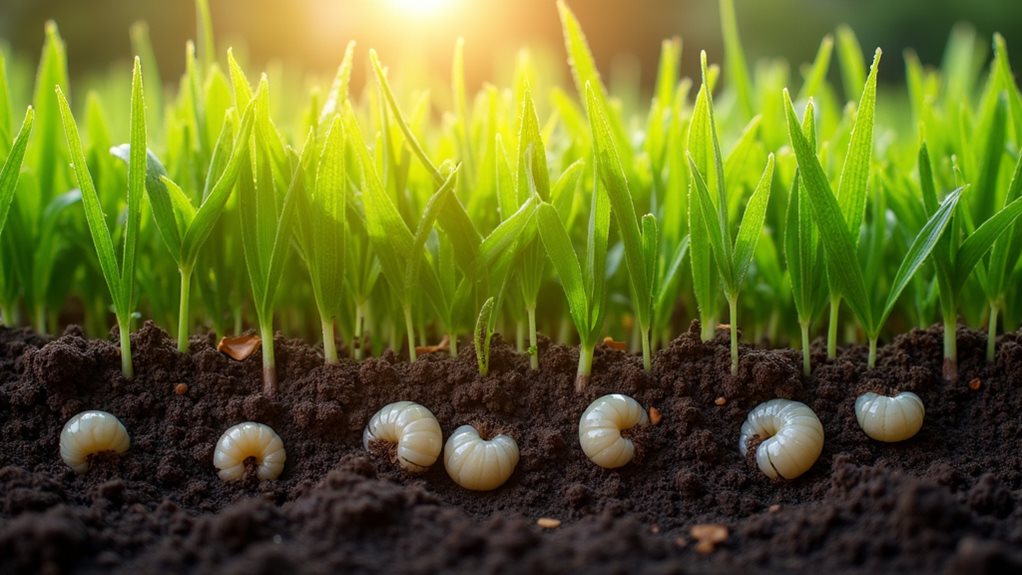
Look for visible patches of dead or discolored grass, which often appear in irregular shapes and spread gradually. Patchy damage that does not respond to water can look like drought or disease; our brown patch vs drought vs grubs guide walks through the key differences.
Check if the turf feels loose, spongy, or lifts easily when you lift sections of the grass.
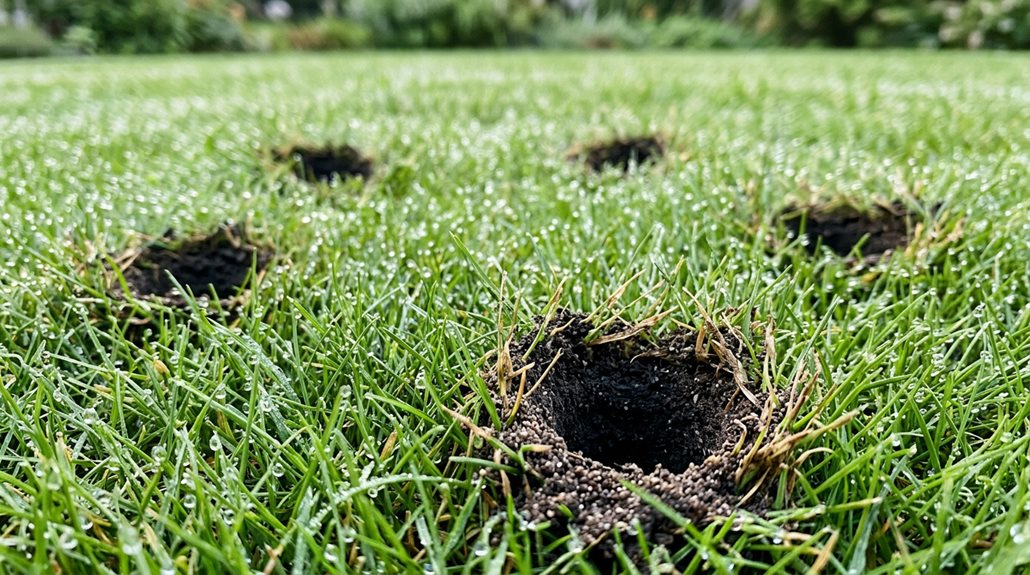
If wildlife like birds or raccoons are digging in your lawn, it can also signal grub activity below the surface.
Visible Lawn Patches
Visible patches of dead or brown grass are often the first signs that grubs may be damaging your lawn. Look for irregular, uneven patches that don’t recover after watering.
Gently lift the turf edges; if they pull up easily or feel spongy, grub activity is likely.
Check for loose sod, and consider inspecting soil for larvae to confirm damage.
Thin or Wilting Turf
When your lawn shows yellowing, discoloration, or a gray-green hue, it signals possible grub damage beneath. Turf may wilt or fade in patches, resistant to watering.
Check if the grass lifts easily or feels spongy. Use a screwdriver or knife to test root strength.
Severely damaged areas may roll up or pull away, indicating root loss.
When Is the Best Time to Preventively Treat White Grubs?
Timing is critical when treating white grubs preventively, and the right window depends on the active ingredient, not just the calendar. Michigan State Extension recommends chlorantraniliprole products, such as GrubEx, from April through early June, because applications made before June perform best. Products with imidacloprid, thiamethoxam, or clothianidin should be applied mid-June to early August instead. If you prefer to time applications by soil temperature rather than the calendar, our guide to grub treatment timing by soil temperature covers the same windows.
Applied too early, neonicotinoid products lose part of their residual before grubs hatch in late July. Ohio State Extension puts imidacloprid and thiamethoxam at roughly eight weeks of residual, so they should not go down before mid-June, while longer-lasting chlorantraniliprole tolerates the earlier window.
Whichever product you choose, water it in with about half an inch of water immediately after application so the active ingredient moves into the root zone where young grubs feed.
How to Use Curative Treatments Effectively
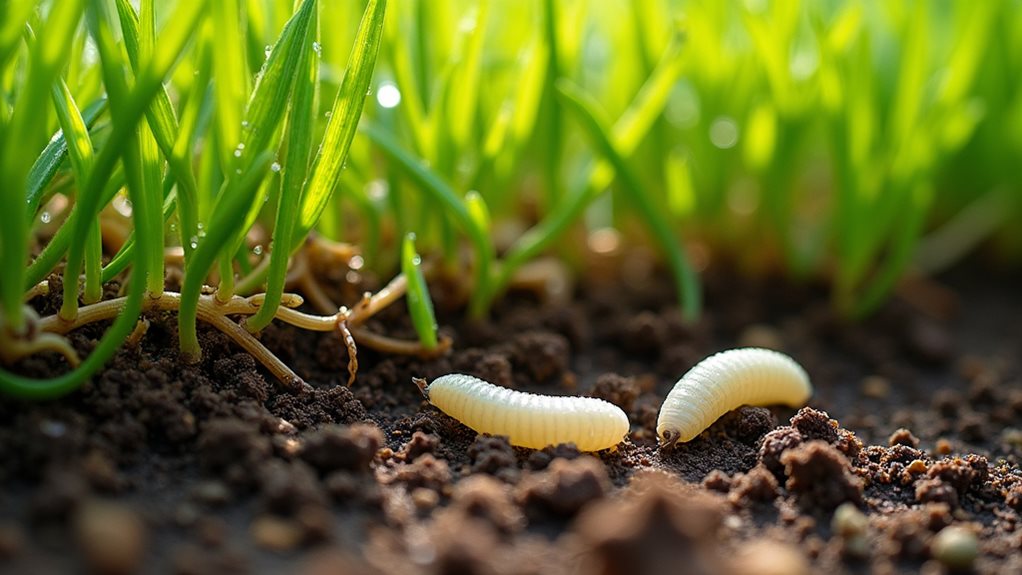
Applying curative treatments at the right time and in the right way can make a big difference in controlling white grubs. Use products like trichlorfon or carbaryl when grubs are actively feeding near the soil surface, typically from July to October.
Water soil before and after application, make sure soil moisture is adequate, and target young grubs for better results.
Tips for Applying Grub Control Products Correctly
To apply grub control products effectively, start by measuring your lawn carefully. Calculate the square footage to make certain you use the right amount.
Use the correct spreader settings and walk at a steady pace for even coverage.
Apply when the lawn is dry, mow beforehand, and water immediately after treatment to move the product into the soil.
Follow all safety instructions.
How to Keep Your Lawn Healthy and Prevent Future Grub Problems
Maintaining a healthy lawn is the best way to prevent future grub problems. Keep grass at 3 to 4 inches high to encourage deep roots. Fertilize on schedule to strengthen turf.
Water deeply, less often, and avoid overwatering. Aerate soil in spring and fall. Overseed bare patches promptly.
Regularly monitor for beetle activity and treat early to keep your lawn resilient.
Sources
Timing windows and treatment thresholds in this guide were checked against university extension publications in November 2026:
Michigan State Extension: how to choose and when to apply grub control products
Ohio State Extension: white grub identification, biology and management
Cornell IPM: grubs and treatment thresholds
Frequently Asked Questions
Can White Grubs Affect All Types of Turfgrass Equally?
White grubs don’t affect all turfgrass types equally. Cool-season grasses like bluegrass are more vulnerable, while warm-season grasses often tolerate them better. However, high grub populations can damage any turf, especially under stress.
Are There Organic or Natural Options for Controlling White Grubs?
Yes, you can use organic options like beneficial nematodes, which target young grubs, and products with Bacillus thuringiensis galleriae. Combining these with soil management and natural predators helps control white grubs effectively.
How Long Does It Take to See Results After Treatment?
You’ll typically see results within 1 to 3 weeks after treatment. Active grubs stop feeding first, then die and lose color. Patience is key, and follow-up treatments might be necessary if grubs persist beyond this timeframe.
Can Overwatering or Drought Influence Grub Activity or Damage?
Overwatering and drought both influence grub activity and damage; overwatering attracts egg-laying beetles and favors grub survival, while drought stresses turf, making it more vulnerable to grub feeding, especially during late summer and fall.
What Are the Environmental Impacts of Common Grub Insecticides?
You should know that common grub insecticides can harm beneficial soil microbes, pollinators like bees, and aquatic life through runoff, persistence, and mobility. They may also contaminate water sources and disrupt ecosystems if not used carefully.