Brown Patch vs Drought vs Grubs: How to Tell Them Apart
To tell brown patch from drought or grubs, look at your lawn’s shape and damage pattern. Brown patch causes circular patches with smoke-ring borders that spread quickly; drought makes uneven, broad dry areas with dull, blue-gray grass, and footprints stay visible. Grubs create scattered, spongy patches where turf lifts easily, often with white larvae underneath. Test by gently pulling turf or inspecting roots. For more precise advice, following these steps helps you diagnose with confidence.
How Can I Tell What’s Wrong With My Lawn?
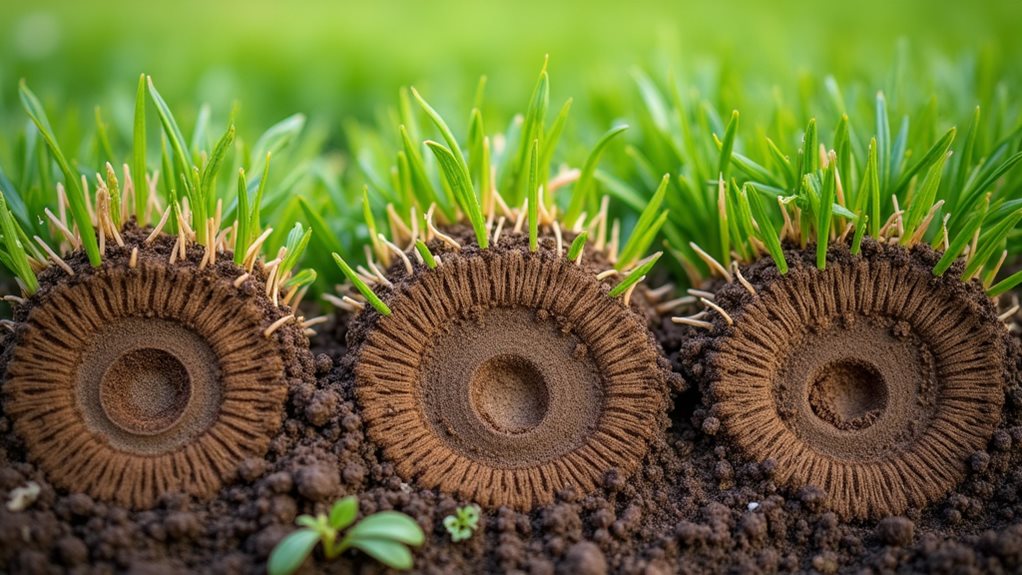
To figure out what’s wrong with your lawn, start by observing the pattern of the damage. Look for uniform decline, which suggests watering or soil issues, or localized patches indicating dry spots or pests. For widespread damage, work through our step-by-step lawn diagnostic to pin down the cause.
Check the edges and shapes of dead areas, and note nearby features like pavement or trees. This helps identify if the problem is environmental or pest-related.
Recognize Symptoms of Brown Patch, Drought, and Grubs
Start by closely examining the affected areas of your lawn. Look for circular patches with light brown or gray-green grass, wilted leaves, and possible white fungal growth.
Check for irregular, dead patches with a spongy feel, or drought signs like bluish-gray grass and footprints.
Use a soil probe or your fingers to assess root health and moisture levels.
What Do Damage Patterns Look Like for Each Problem?
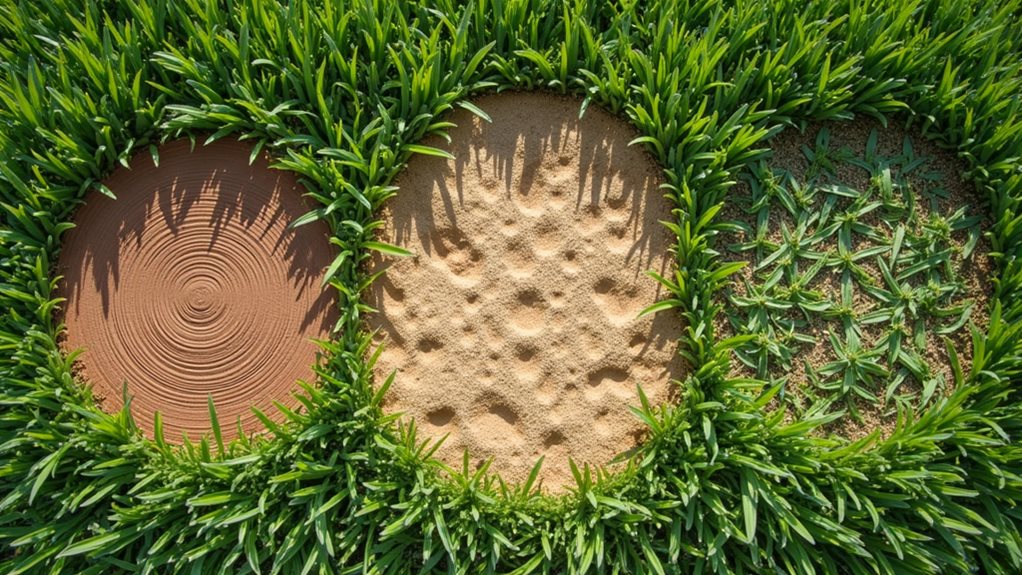
Look closely at the damage patterns to identify the problem. Brown patch creates circular patches that may merge.
While drought causes irregular dry spots that don’t have clear edges.
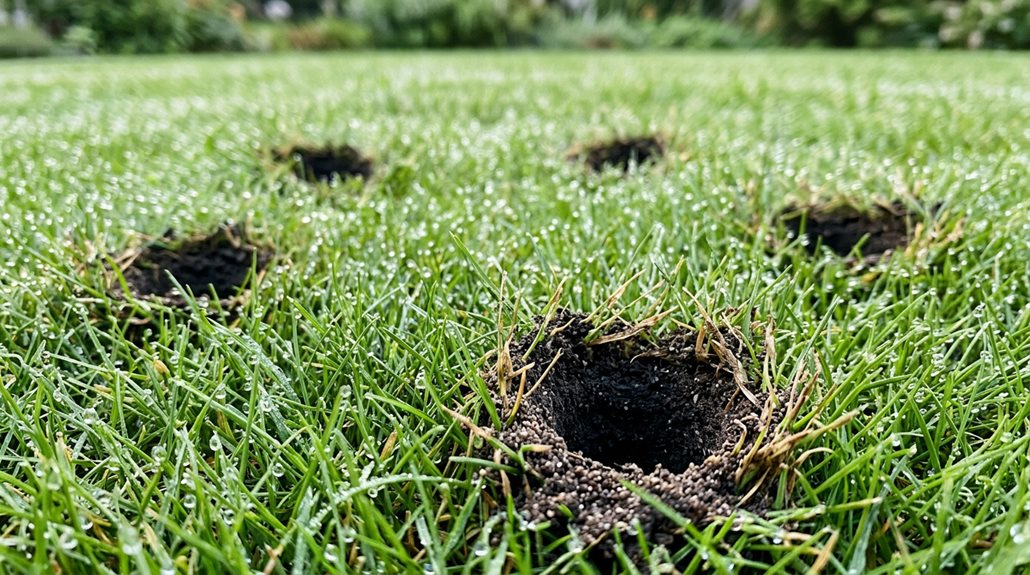
Grub damage often starts with patches of wilting turf that may lift easily or feel spongy when pressed.
Damage Spread Patterns
Understanding the damage spread patterns of each problem helps you identify what’s causing turf issues.
Brown patch spreads in circular or clustered areas, often with dark “smoke rings,” expanding outward.
Drought stress appears as uneven dry spots, with damage following site conditions.
Grub damage starts as scattered patches, worsening where root feeding concentrates, often lifting turf.
Patch Shape and Size
Different turf problems create distinct patch shapes and sizes that can help you identify the cause. Round patches are not all brown patch, so rule out lookalikes such as red thread, which looks similar at a glance.
Brown patches are usually round or nearly round, often with a smoky border.
Drought damage appears as uneven, broad browning without clear edges.
Grub damage shows irregular, scattered dead patches.
Observe shape, size, and borders to distinguish each problem accurately.
How to Use Field Tests to Diagnose Lawn Issues
Start by performing a tug test at the edge of the damaged area; if the turf lifts easily and roots are missing, grub damage is likely.
Next, check the soil with a screwdriver—if it’s hard to penetrate, drought stress is probably to blame.
Finally, observe footprints and the boundary zone between healthy and damaged grass to help identify moisture issues or brown patch.
Tug Test Results
If you suspect grub damage or want to confirm its presence, performing a tug test is a quick and effective method. Grab a handful of damaged turf at the patch’s edge, gently pull upward, and observe.
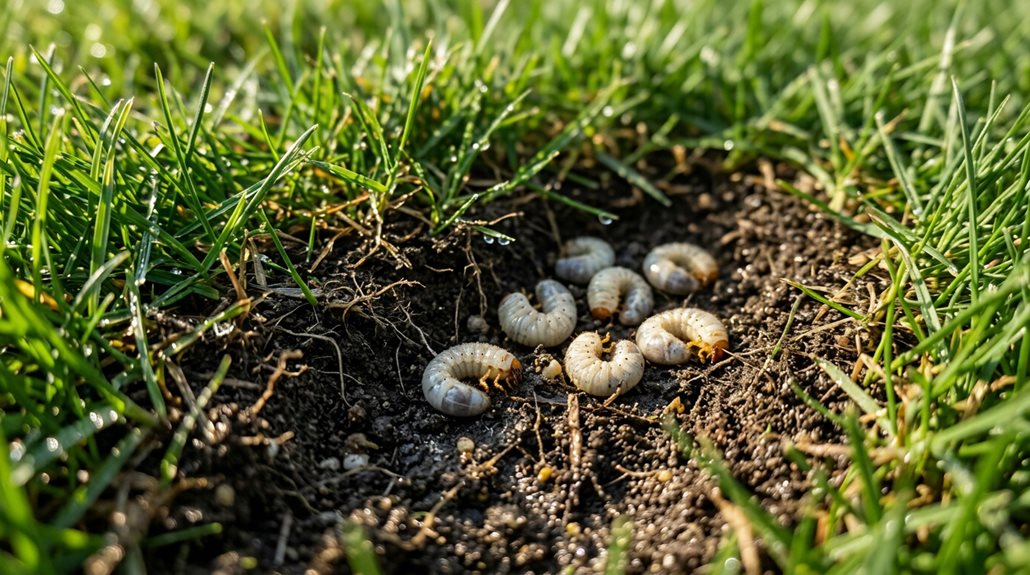
If the turf lifts easily, with little soil or roots attached, it likely indicates grub feeding. Confirm by inspecting the soil for white, C-shaped larvae. For photos and treatment timing, see our white grubs in grass guide.
Watering Response Clues
Using watering response clues is an effective way to identify lawn issues. Water the affected area deeply in the early morning.
Observe how the turf responds over the next two days. If it greens quickly, drought is likely.
If the patch stays spread or circular, disease may be the cause.
If no change, inspect for grubs or other underlying problems.
Soil and Root Inspection
Examining the soil and roots directly is essential for diagnosing lawn problems. Start by inspecting the top 2–4 inches of soil at damaged areas.
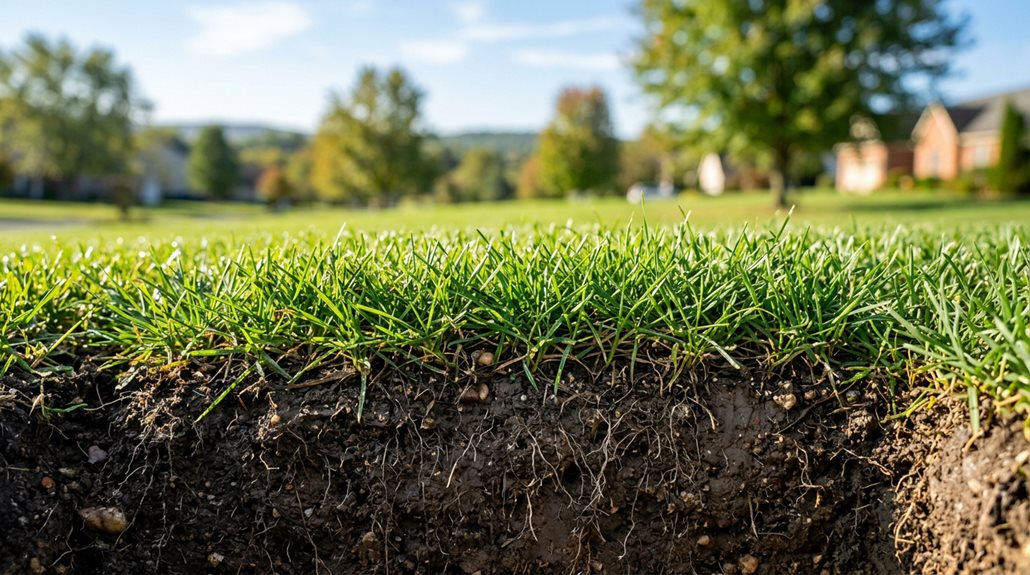
Peel back turf or cut three sides with a spade to expose roots and thatch.
Compare affected and healthy sections, looking for missing, brown, or short roots, and check for white larvae or loose turf.
How Does Drought Stress Show Up in Your Lawn?
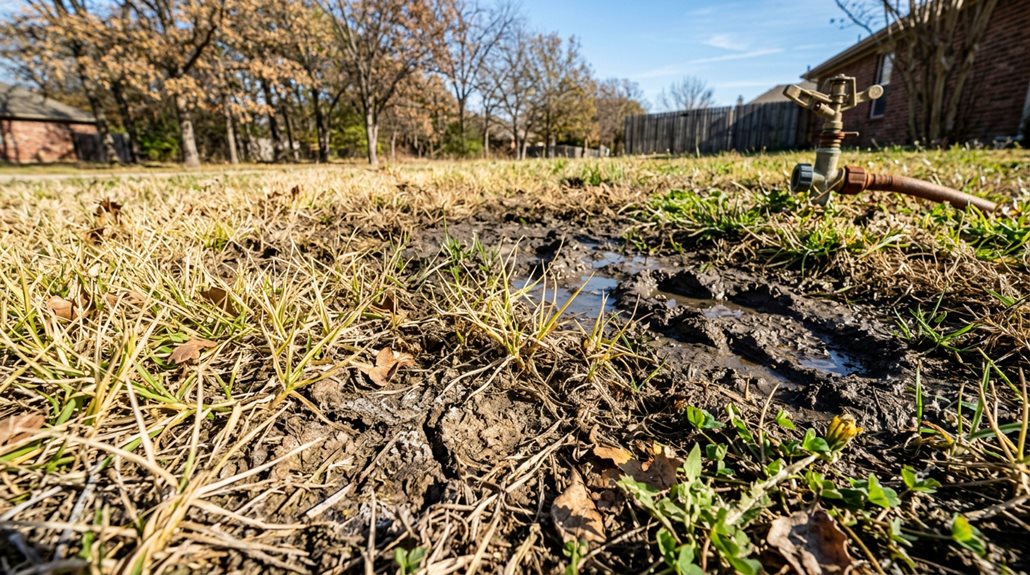
Drought stress in your lawn shows up in several clear ways you can spot with careful observation. Look for a bluish-gray or dull color instead of healthy green.
Check if footprints or mower tracks stay visible after stepping or mowing.
Notice if patches are uneven, especially near heat-exposed areas.
Also, observe if grass appears wilted, folded, or if growth has slowed considerably.
Identifying Brown Patch Disease by Its Spread
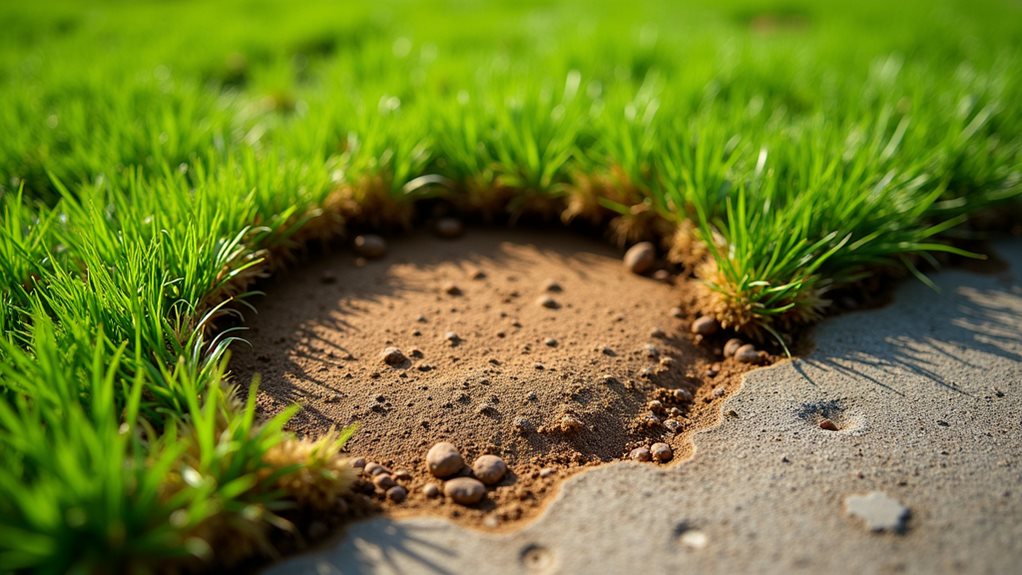
When identifying brown patch disease by its spread, start by observing the shape and pattern of the patches. Look for roughly circular patches that expand rapidly, especially in warm, humid weather.
Check for smoke-ring edges and merging circles. Rings on their own are not proof of brown patch, because fairy rings in lawns also appear as circles.
Note the speed of growth and the presence of dark borders or a gray-white band, indicating active disease.
Spotting Grub Damage and Root Feeding Signs
To spot grub damage, start by feeling the turf; if it’s spongy, soft, or bouncy underfoot, that’s a warning sign.
Lift small sections of sod carefully using a garden fork or trowel to check for looseness and see if the soil beneath is stripped or sparse.
Finally, inspect beneath the lifted turf for white, C-shaped larvae, which confirm grub activity and root feeding.
Spongy Turf Feel
A spongy turf feel can be a key sign of grub damage in your lawn. To confirm, cut a small section of turf in the affected area.
Gently lift it to check the roots. If they look eaten or feel loose, and you see white grubs, it indicates root feeding.
Address the infestation promptly to prevent further damage.
Loose or Lifted Sod
Loose or lifted sod signals possible grub damage and root feeding. To confirm, gently lift a section of the turf, noting if it peels back easily.
Check the underside for fewer roots or bare soil. Look for irregular patches and signs of animal activity.
This indicates root loss, often caused by grubs, unlike drought or fungal issues.
Root and Larvae Inspection
Start by inspecting the root zone of the damaged turf to identify signs of grub activity or root damage. Cut a 1-by-1-foot section, peel back the turf, and break apart soil around the roots.
Look for white, C-shaped grubs, chewed roots, or sparse, brown roots. Compare root health with nearby healthy grass to determine if feeding or other issues are present.
How to Differentiate Between These Lawn Problems Quickly
To quickly tell apart brown patch, drought stress, and grub damage, examine the affected area closely.
Look for circular or irregular brown spots with sharp edges for brown patch.
Check if the turf feels dry and firm for drought, or loose, spongy, and lifts easily if grubs are present.
Use a tug test or water response to confirm.
| Clue | Brown patch | Drought | Grubs |
|---|---|---|---|
| Patch shape | Circular, may merge, smoke-ring border | Irregular and broad, no clear edge | Scattered and irregular |
| Turf feel | Normal to firm | Firm and dry | Spongy, lifts easily |
| Tug test | Holds firm | Holds firm but dry | Pulls up like carpet, roots gone |
| Response to watering | Stays or keeps spreading | Greens up within days | No change |
| When it appears | Warm, humid weather | Hot, dry spells | Late summer to fall |
| Best confirmation | Smoke ring in morning dew | Footprints stay visible | White C-shaped larvae in the soil |
Work through the rows in order. The tug test and the watering response are the two fastest ways to narrow the cause before you spend money on the wrong treatment.
When Should I Call a Lawn Care Professional?
Knowing when to call a lawn care professional can save you time and prevent further damage. Call when damage spreads rapidly, covers large areas, or keeps recurring after basic repairs.
If you notice loose roots, turf lifting, or signs of pests like grubs, seek expert help.
For persistent disease or drainage issues, professional diagnosis guarantees correct treatment and prevents worsening problems.
Preventive Tips and Treatments for Healthy Lawns
Maintaining a healthy lawn involves proactive steps that prevent problems before they start. Water deeply and early in the morning, avoiding evening watering.
Raise mowing height during drought, keep blades sharp, and remove clippings when disease is active.
Use resistant turf varieties and apply preventive fungicides before outbreaks. Skip fertilizer while disease is active, since nitrogen can fuel fungal growth; see our guide to when to fertilize for safe timing.
Aerate soil and manage thatch to improve drainage and reduce disease risk.
Sources
Disease and damage identification in this guide was checked against university extension publications, checked November 2026:
NC State Extension: brown patch in turf
Frequently Asked Questions
Can Multiple Problems Occur on the Same Lawn Simultaneously?
Yes, multiple lawn problems can happen at once. You might see drought stress, grub damage, and disease signs overlapping, making diagnosis tricky. Check moisture, roots, and insects to identify and address each issue effectively for healthy turf.
How Long Does Each Issue Typically Take to Show Visible Signs?
Brown patch shows signs within days during warm, humid weather; drought stress develops gradually over weeks with color changes and footprints; grub damage appears later, in late summer or fall, with uneven, spongy patches indicating root loss.
Are There Specific Times of Year When Each Problem Is Most Common?
You’ll see brown patch mainly from late spring to summer, drought during hot, dry mid-summer periods, and grubs mostly in late summer through fall. Recognizing these seasonal patterns helps you identify and address each issue timely.
Can Weather Patterns Influence the Severity of These Lawn Issues?
Weather patterns greatly influence the severity of lawn issues. Hot, humid, and wet conditions worsen brown patch; dry, hot weather intensifies drought stress; and moist soil, especially during spring and fall, increases grub damage.
Is It Safe to Treat All Problems With the Same Lawn Care Products?
You shouldn’t treat all problems with the same product because each issue—fungal, drought, or insect—needs specific control methods. Using one product incorrectly can harm your lawn and delay proper recovery. Diagnose first, then treat accordingly.