Small Holes in Lawn: 5 Causes and How to Identify Them
To identify the cause of small holes in your lawn, observe their size, shape, and pattern. Tiny, round, smooth-edged holes often mean adult beetles emerged from the soil, or that ground-nesting bees or wasps dug nest openings. Grubs stay underground; it is the adult beetles that leave emergence holes. Look nearby for soil castings or loose soil to confirm. If you see larger, irregular patches with flipped turf, animals like raccoons or skunks may be digging. Small, shallow holes with no soil disturbance could be bird probing for insects. Follow these clues to determine the cause, then match what you find against the sections and chart below.
How to Recognize Tiny Insect Holes in Your Lawn
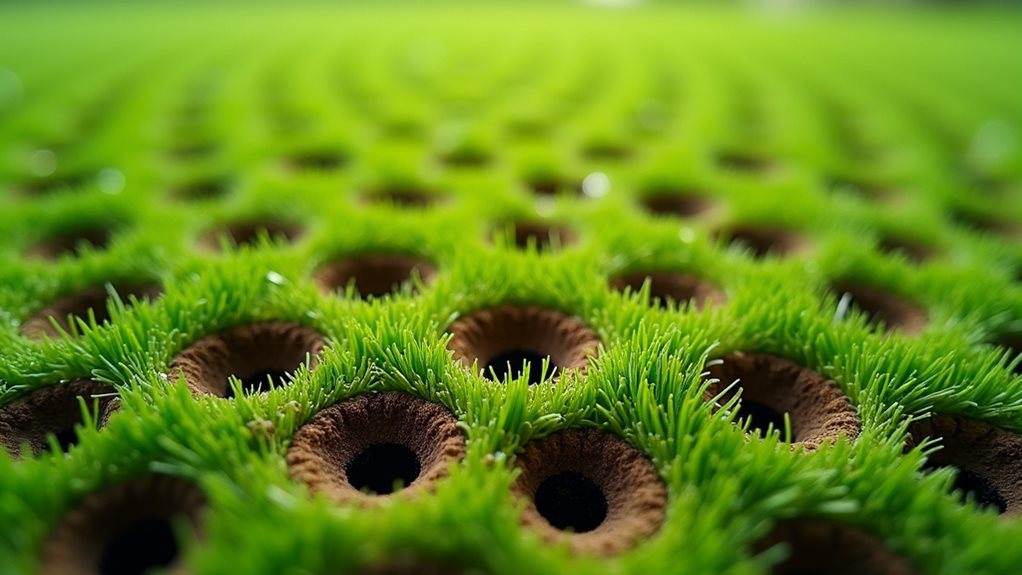
To recognize tiny insect holes in your lawn, start by observing the size and shape of the openings. Look for small, perfectly round holes about 1/8 to 1/2 inch wide with clean edges.
Check for vertical shafts with little surface disturbance, often indicating ground-nesting bees or wasps.
Note if holes appear in dry, sparse, or sunny areas, especially after rain.
How to Tell Soil Emergence Holes Apart From Insect Damage
When trying to tell soil emergence holes apart from insect damage, start by carefully examining the shape and edges of the holes. Look for clean, round, vertical openings with smooth rims, which indicate emergence.
Ragged edges, torn turf, or loose soil suggest animal or insect digging.
Consider the soil’s condition and nearby signs, like soil mounds or castings, to identify the cause.
Recognizing Small Rodent Entrances and Burrows
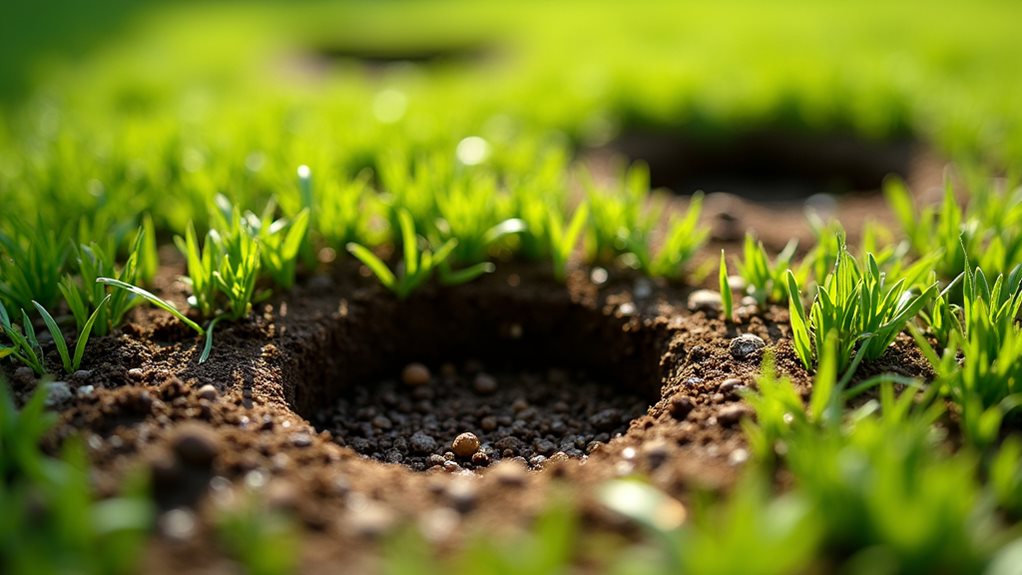
Recognizing small rodent entrances and burrows involves paying close attention to the size, shape, and location of the openings.
Look for 1 to 2-inch round holes, often at the base of grass or dense cover.
Check for fresh soil, narrow runways, and absence of large mounds.
Confirm activity by observing tracks, droppings, or animals entering the holes.
\n
Vole damage peaks in late winter and early spring, when snow cover hides their runways from view. After the snow melts you may find highways of clipped grass woven across the surface. Rake out the dead material, topdress, and seed; the lawn usually fills back in on its own within a few weeks if the grass crowns survived.
Signs of Larger Animals Like Raccoons and Skunks Digging
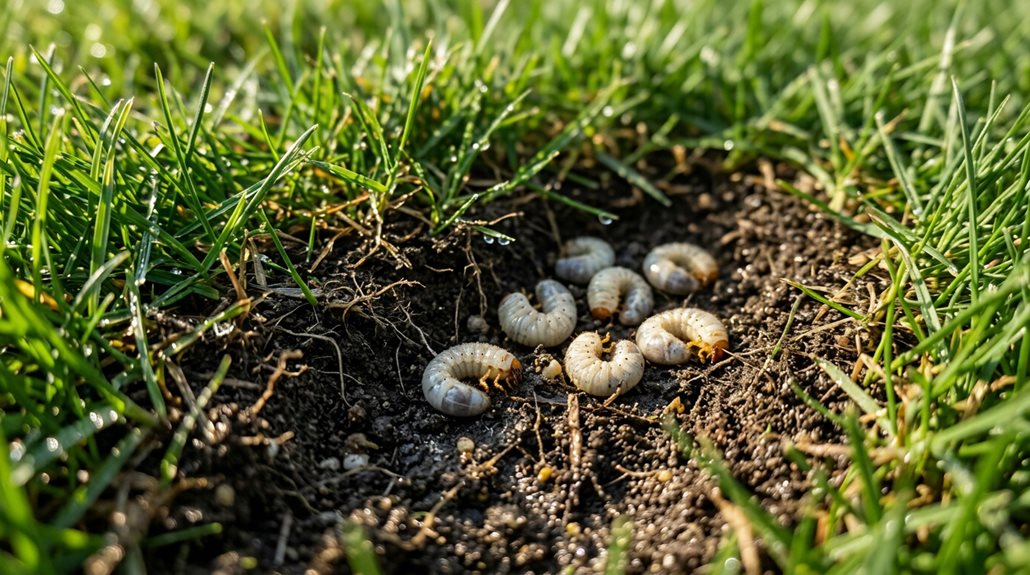
Lawn damage caused by raccoons and skunks can look different from small rodent holes, so look closely at the pattern and size of the disturbed area. Raccoons lift and flip turf, leaving larger patches. Both dig at night while hunting for white grubs, which they can smell beneath the surface.
Skunks create small, cone-shaped holes. Check for soil disturbances, scattered dirt, or rolled-back turf to identify which animal caused the damage.
How Birds and Other Causes Create Lawn Holes
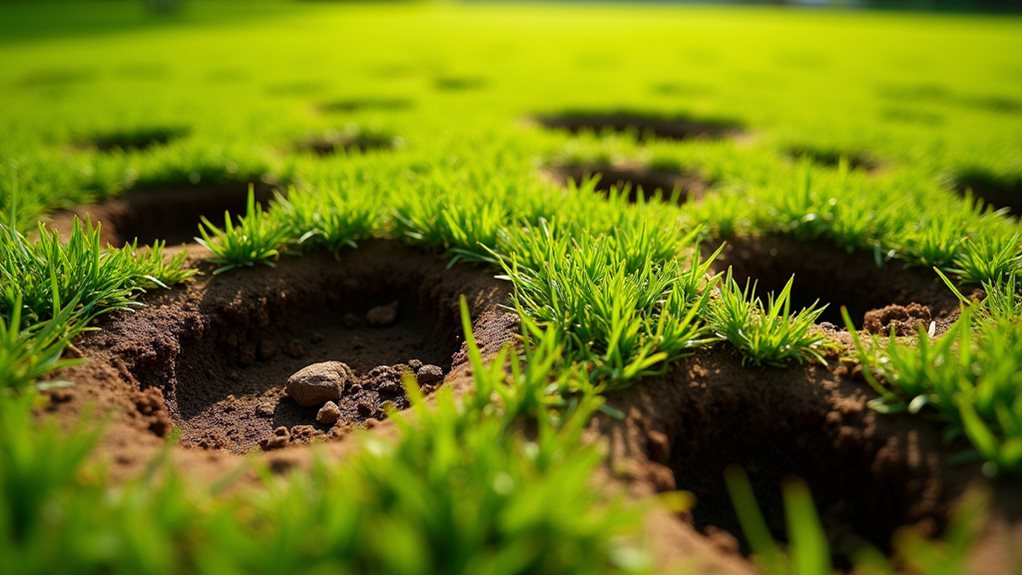
Birds often create small, clean-edged holes in your lawn while searching for earthworms, grubs, and other insects. To identify bird activity, look for shallow, scattered holes without soil mounds.
Check for nearby insect activity or soil castings. Use a flashlight to observe if birds are actively probing, and note the absence of deep tunnels or soil disturbance typical of other causes.
Printable Lawn Hole Identification Chart
| Hole or damage | Typical size | Other clues | Most likely cause |
|---|---|---|---|
| Tiny round holes with clean edges | 1/8 to 1/2 inch | Vertical shaft, sparse or dry soil | Ground-nesting bees or wasps |
| Nickel-sized holes with small soil mounds | About 1 inch | Appear in spring, especially after rain | Insect emergence (cicadas, June beetles) |
| Shallow scattered holes, no mounds | Under 1 inch | Birds pecking at the lawn | Birds hunting insects and grubs |
| Clean round openings near dense cover | 1 to 2 inches | Fresh soil, narrow runways, no large mound | Voles |
| Cone-shaped holes dug at night | 3 to 4 inches | Scattered dirt, disturbed turf | Skunks hunting grubs |
| Larger torn patches of flipped turf | Several inches | Rolled-back sod, overnight digging | Raccoons hunting grubs |
| Small piles of granular soil castings | Pencil-sized tunnels | Spring and fall, moist soil | Earthworms (harmless, beneficial) |
Save this chart or print it out, then match the hole in your lawn against each row before you treat anything. Getting the cause right the first time saves you money and keeps you from treating the wrong problem. The chart lists seven common sights, but only five are actual causes: insects, birds, voles, raccoons, and skunks. Earthworm castings are the harmless lookalike, so that row needs no treatment.
Why Holes Appear After Rain
After a good soaking rain, a surprising number of holes can show up overnight. May and June beetles pupate underground and emerge as adults in late spring and early summer, pushing up through the soil and leaving nickel-sized openings that are often ringed with small mounds of loose soil. Annual cicadas emerge in July and August, and periodical cicadas surface in spring only on 13- or 17-year cycles, not every year.
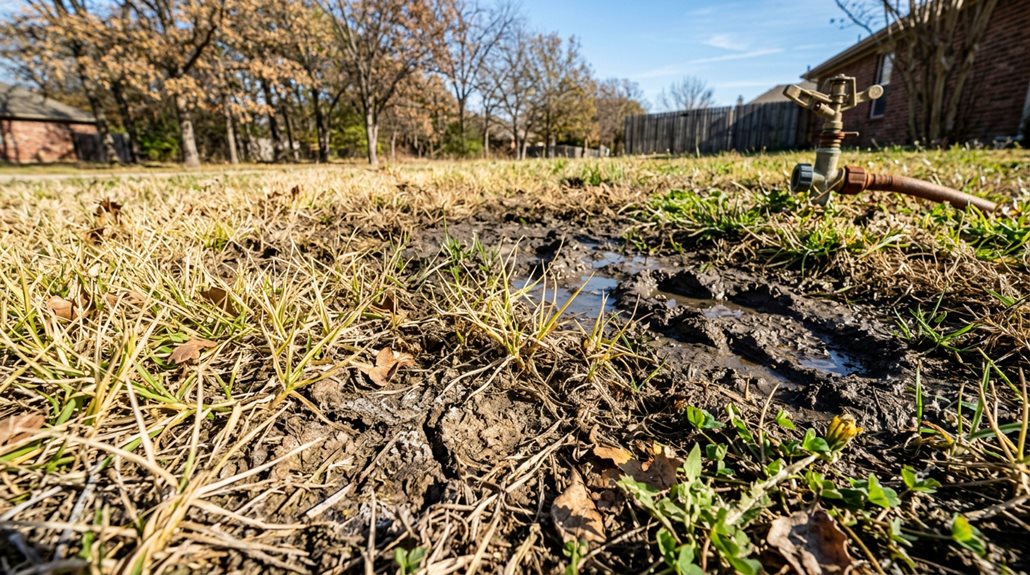
Earthworms also come closer to the surface when soil is moist, which makes their pencil-sized castings more obvious. If new holes appear mainly after rain and cause no real turf damage, they are usually harmless emergence holes rather than a sign of a serious pest problem. If water pools or the soil stays soggy for days after rain, the cause is more likely a yard drainage problem than insects.
\n
After the rain stops, walk the lawn with the chart above and sort the holes by size and edge. Emergence holes and earthworm castings can be left alone; they settle back into the turf within a few weeks. Burrows that reappear in the same spot, holes along a foundation line, or tunnels with fresh soil every morning point to an animal still active, and those need the food source or the animal addressed before any repair will hold.
How to Fix and Prevent Lawn Holes
Once you know what is causing the holes, the fix is straightforward. For small holes in the lawn, fill them with a mix of topsoil and seed, press it down, and keep it moist until the grass fills in. For the best seeding windows in your zone, use our printable planting calendar. For torn turf from raccoons or skunks, roll the sod back into place, water it well, and press out any air pockets. Work with the hole type in front of you. Push soil into emergence holes and small entrances with your hand or the back of a rake, scatter seed on top, and tap it level. Rough up vole runways with a rake, topdress with a quarter inch of topsoil, and seed them. For torn areas larger than a dinner plate, sod patching usually beats seed, because the rolled turf still has roots and greens up faster than new seedlings.
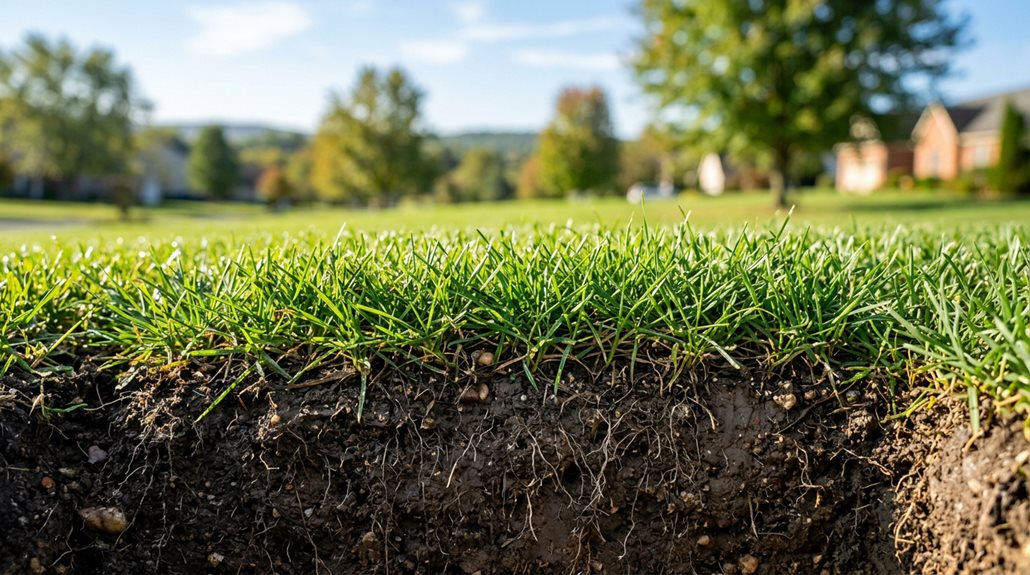
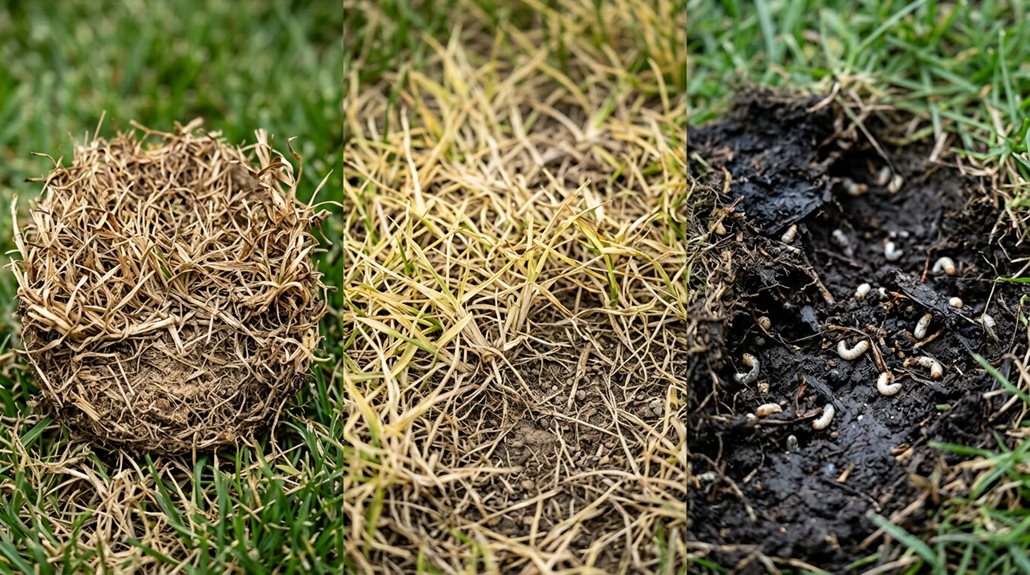
To stop holes from coming back, deal with the food source first. Animals dig at night mainly to reach grubs, so checking for white grubs and treating them when counts are high is often the single most effective step. Lift a square foot of turf and count the larvae before you treat, and our guide to confirming grub damage first lists the field signs to check. Purdue’s turfgrass insect guide notes that raccoons, skunks, or turkeys digging for grubs is often the first visible sign of an infestation. Mow at 3 to 4 inches to encourage deep roots, water deeply but less often, and keep the soil healthy with regular aeration. Voles and other rodents prefer tall, dense cover, so keeping the lawn trimmed and clearing debris near the house helps too.
\n
Timing matters as much as the repair itself. In cool-season lawns, which cover most of the northern United States, early fall is the best reseed window: soil is still warm, nights are cool, and weed pressure is falling, so seed fills in before winter. Late summer through early fall works in the transition zone too. In warm-season lawns across the South, repair in late spring once soil temperatures hold above 65 degrees F and the grass is actively growing. Skip winter repairs in frozen ground; fill those holes with topsoil only and seed after the thaw.
\n
Keep new seed consistently damp while it germinates, which usually takes 7 to 14 days for ryegrass and fescue and longer for bluegrass. Water lightly once or twice a day until seedlings reach mowing height, then shift to deeper, less frequent watering to push roots down. Stay off repaired areas for the first few mowings, and hold fertilizer until the new grass has been mowed twice.
When to Call a Professional
Most lawn holes are cosmetic and easy to handle yourself, but call a professional if the damage keeps spreading, if the holes cover a large area, or if you suspect a dangerous nest such as yellowjackets or ground-nesting wasps. Large burrow systems from groundhogs or armadillos are also best handled by an expert, since filling them correctly takes more than just pushing soil back into the opening.
\n
Expect simple hole filling from a lawn service at modest cost. Large burrow exclusion work, such as fencing or trapping groundhogs, is a job for a wildlife control operator and is priced per site. Ask any professional to identify the cause before they treat, because filling holes without removing the food source, the nest, or the drainage problem invites a repeat.
Frequently Asked Questions
How Can I Distinguish Between Insect and Rodent Holes Quickly?
You can quickly distinguish between insect and rodent holes by measuring the size; tiny, shallow holes with little soil usually indicate insects, while larger, deeper openings with disturbed turf suggest rodents. Look for tunnel signs and soil displacement.
What Tools Are Best for Inspecting Underground Lawn Damage?
Use a soil probe or a hand trowel to open a small flap of turf and check underneath, a flashlight to look into burrows and emergence holes, and a ruler to record the size and depth of each opening. Check for bee or wasp activity before you dig, then press the turf flap back in place.
Do Lawn Holes Indicate Underlying Soil Health Issues?
Lawn holes can indicate soil health issues, especially if they’re shallow and in low, wet areas. But they often result from animal activity, insect emergence, or mechanical damage, so consider surrounding soil conditions and signs before concluding. If holes are spreading along with thinning or dying turf, our step-by-step diagnostic guide can help you find the underlying cause.
How Often Should I Check for New Holes or Activity?
You should check your lawn at least once a week, especially during peak pest seasons. Increase inspections to every few days if you notice new holes, damage, or signs of pests, and recheck after heavy rain or mowing.
Can Pest Control Methods Harm Beneficial Insects or Wildlife?
Yes, pest control methods can harm beneficial insects and wildlife, especially if you use broad-spectrum pesticides or spray during active pollination times. Opt for targeted, eco-friendly options and follow label instructions to minimize harm and protect your ecosystem.
Why Do I Have Holes in My Lawn But No Mounds?
Mound-free holes usually point to birds, earthworms, voles, or shallow digging rather than moles or groundhogs, which push up obvious mounds. Birds leave small, clean-edged holes while probing for insects, earthworms leave pencil-sized castings, and voles leave 1 to 2 inch openings with runways and no soil pile.
Do Lawn Holes Mean I Have Grubs?
Not always, but it is a strong clue. Skunks, raccoons, and birds dig in lawns specifically to reach white grubs, so repeated digging often means grubs are present underneath. Lift a one-square-foot section of turf and count the white, C-shaped larvae to confirm before treating.
How Do I Fill Holes in My Lawn Without Harming It?
Fill small holes with a light topsoil and grass seed mix, then water gently so the soil settles without forming a crust. For larger torn areas, press the existing sod back into place, water it, and keep traffic off until the roots re-establish. Avoid packing the soil down hard, which makes it difficult for new grass to grow.