What to Plant in November: Zone-by-Zone Vegetable Guide
November is the month most gardeners write off, and in zones 7 through 10 that costs a whole season of harvest. The soil still holds summer heat, weed pressure has collapsed, and the cool-season crops that sulk through August settle in within days of sowing. What you have to decide this month is not a full seed order. It is two narrower questions: which crops your soil is still warm enough to germinate, and how much protection you are willing to build before the first hard freeze.
Zones 3 and 4 are protected sowing only. Zones 5 and 6 get garlic, shallots, spinach and mache. Zones 7 through 10 still have a real growing season in front of them and should be planted rather than tidied up.
November is a planting month, not a cleanup month
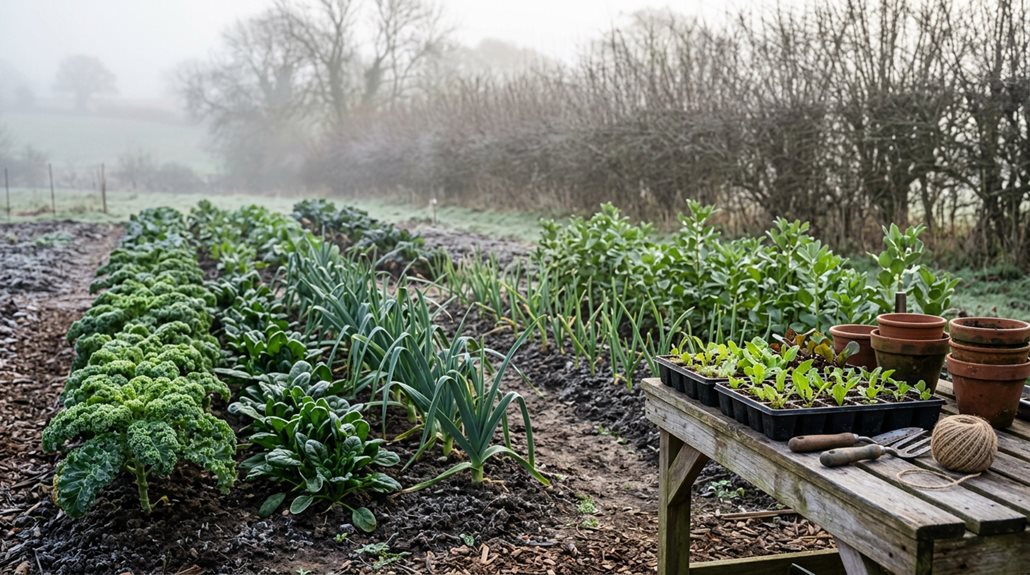
A November sowing does work that a March sowing cannot. Seed dropped into cooling soil germinates slowly, roots spread through the mild weeks that follow, and the plants sit semi-dormant through the coldest stretch with a root system already built. A March sowing starts from nothing, in soil that is usually colder, wetter and slower to warm than the soil you have now.
The arithmetic is simple: days to maturity against your first killing frost. Leaf lettuce runs 50 to 60 days, spinach 50 to 70, radish 25 to 30 and garden peas 60 to 80, according to University of New Hampshire Extension. In zone 8 those numbers land in January and February, which is exactly the point. A November sowing there is a winter harvest, not a bet on spring.
In zone 6 the same sowing usually does not mature before the ground freezes. It overwinters as a small plant and finishes in March. Both outcomes beat a bare bed, but only one of them puts food on the table in January, so decide which you are planting for before you open a packet.
If you already planted in October, most of those crops are now established and this month’s job changes to protection and thinning. The crops that missed the October window are the ones worth sowing now, and the October planting list shows you what is already in the ground.
Soil temperature is the only gate
Air temperature decides nothing. Germination is set by soil temperature at seed depth, which means the top 2 inches, and every crop has a floor below which the seed takes up water and rots instead of sprouting.
Spinach germinates from about 35°F but emerges most evenly between 45°F and 68°F, according to Penn State Extension. Garden peas need 40°F and up. Lettuce needs 40°F and up, and germination is patchy below 45°F, which shows up three weeks later as a row with gaps. Radish is the fastest and most forgiving of the group. Carrots are the slowest and the most likely to fail in cold, wet soil, so treat 45°F as their practical floor rather than the textbook 40°F.
Measure it properly: a soil probe or an instant-read kitchen thermometer pushed to 2 inches, read mid-morning, averaged across three days. A single warm afternoon after a frost reads 5 to 8°F higher than the soil is actually holding, and that false reading is how a lettuce row gets sown into 38°F ground.
Two more soil conditions decide the outcome. Waterlogged ground at 42°F rots seed that would have germinated fine at 42°F in a drained bed, so sow the highest, best-drained part of the garden first. And soil that has just been turned over reads colder than undisturbed soil for a week or more, so rake and settle a bed before you measure it.
What each zone can still sow
The table below compresses the decision. Protection assumptions matter as much as the crop list, because a November sowing under row cover is a different proposition from the same seed on bare ground, and the zone ranges describe a normal year rather than an early freeze.
| Zone | Crops to sow | Crops to transplant | Protection needed |
|---|---|---|---|
| 3 and 4 | None outdoors | None | Cold frame or indoor lights only |
| 5 | Garlic, shallots, spinach, mache | None | 4 inches of straw on garlic, row cover on greens |
| 6 | Garlic, shallots, spinach, mache, winter rye | Shallot sets | Row cover adds 4 to 6°F, straw on garlic |
| 7 | Carrots, beets, lettuce, radish, peas in mild spells | Lettuce and spinach seedlings | Row cover on nights below 28°F |
| 8 | Carrots, beets, lettuce, radish, peas, kale, chard | Lettuce, spinach, onion sets | Row cover only for hard freezes |
| 9 and 10 | Lettuce, radish, carrots, beets, kale, broccoli, peas | Broccoli, cabbage, lettuce | Shade cloth for hot spells, frost rarely limits |
Two things the table cannot tell you are whether your beds drain and whether they sit in a frost pocket. A low, heavy bed in zone 7 behaves like zone 5 in November, and a south-facing raised bed in zone 5 can outperform a flat zone 6 garden. Match the dates to your own frost date rather than your zone number by using the printable planting calendar, which is built for exactly that adjustment.
Zones 3 and 4: protected sowing only
Outdoor sowing is finished in zone 3 and effectively finished in zone 4 by the middle of the month. Ground is frozen or within two or three weeks of freezing, and direct-sown seed will sit until March at best and rot at worst.
Three things still work. Garlic goes in if the ground can be worked at all, because cloves need roughly three weeks of root growth before the soil locks up. A cold frame sown now with spinach or mache produces cutting greens in February and early March, weeks before the beds outside can be worked. Containers you can move into a garage or against a south wall keep lettuce and herbs going for another month.
Everything else in zone 3 and 4 is preparation: a soil test, compost on the empty beds, seed ordered, and the cold frame glazed and set where it gets winter sun. That work is what makes a February harvest possible, and none of it can be done in frozen ground.
Zones 5 and 6: garlic, shallots, spinach and mache
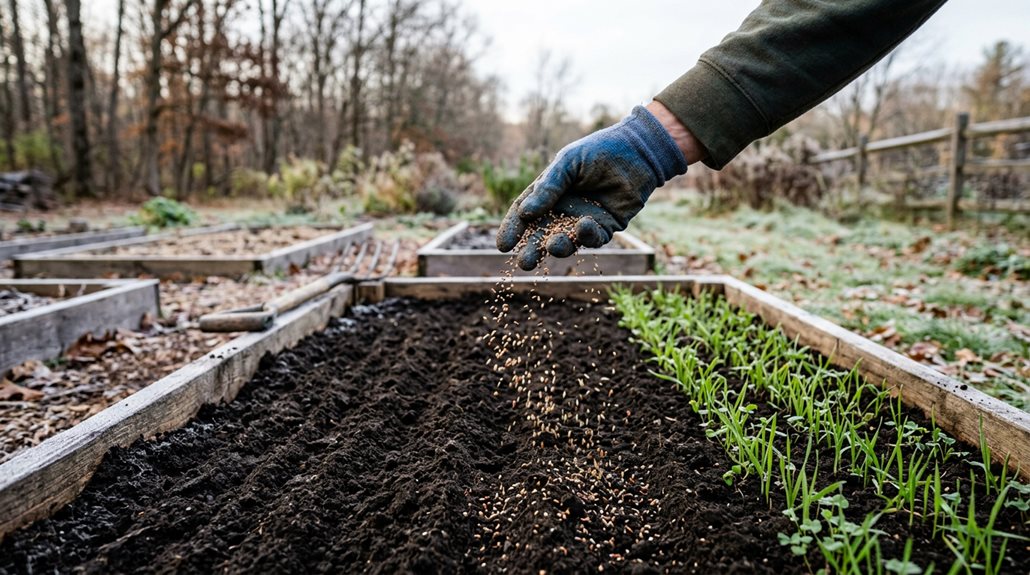
This is the classic November planting window, and garlic is the crop that defines it. Plant cloves pointed end up, 2 inches deep and 4 to 8 inches apart, in soil that drains, then mulch with 4 inches of straw or shredded leaves. The mulch stops frost heaving, which is what pushes cloves out of the ground in a bare January thaw and kills them.
Shallots follow the same pattern, set just below the surface rather than buried, and they tolerate a wetter bed than garlic does. Spinach sown now is a gamble with a good payoff: in a mild zone 6 winter it overwinters under row cover and starts growing in late February, and in a hard winter it dies and costs you a packet of seed.
Mache, also sold as corn salad, is the most reliable November green in this range. It germinates in cold soil, shrugs off single-digit nights under cover, and holds a rosette of small leaves all winter without bolting. Sow it thickly and thin by cutting.
Winter rye and clover go in on beds you are not cropping. Rye germinates at low soil temperatures and holds the soil through winter, and clover fixes nitrogen if it establishes before the cold. Neither is a harvest, and both are worth the twenty minutes.
Zones 7 through 10: the long window
This is where November sowing beats waiting for spring outright. Carrots sown now in zone 8 size up through December and January and are ready before the soil warms, while carrots sown in March or April hit 80°F soil in June, grow fast and turn woody and bitter. The same logic applies to beets and radish.
Lettuce is the crop to sow in succession rather than in one block. A short row every three weeks from now through February gives continuous cutting through a zone 8 or 9 winter, and a single large sowing gives you a glut followed by bolting. Loose-leaf types handle cold better than head types, and they recover from light frost damage that would ruin a heading lettuce.
Peas are the exception that needs a mild spell rather than a date. They need 40°F soil, they rot in cold wet ground, and they take 60 to 80 days. In zone 8 and 9, a sowing in the second half of November usually flowers in February and pods before the heat shuts the plants down in May. In zone 7, wait for a ten-day forecast with nights above 35°F and take the sowing when it comes.
In zones 9 and 10 the limit is heat, not cold. Cool-season vegetables grow right through the winter, and the risk is a warm spell that pushes lettuce to bolt and peas to stop setting. Shade cloth on an 80°F afternoon in December is not a joke in zone 10, and it is cheaper than replanting.
Row cover and cold frame math
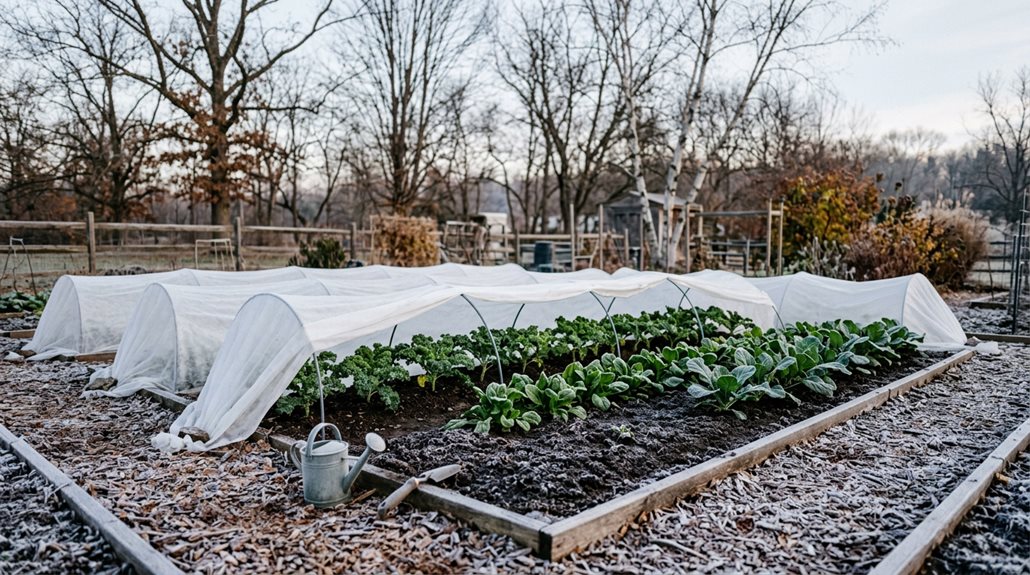
Spun row cover adds roughly 4 to 6°F of protection, and a second layer adds a few more degrees but also cuts light. A cold frame does considerably better because it holds a volume of still air, which is why Virginia Cooperative Extension puts the extension of the planting and harvest window at two to four weeks for row cover and cold frames together. That two-to-four-week difference is the whole margin between a January harvest and a dead row in zone 7.
Install cover before the freeze, not after. Lay hoops or stakes first so the fabric is not resting on leaves, drape with slack for growth, and weight the edges with soil or clips so wind cannot get under it. Cover laid flat on the plants transfers cold straight through the fabric and crushes what it touches.
Ventilation matters as much as insulation. On a sunny 45°F day the air inside a closed cold frame can pass 80°F, and plants cook in an hour. Prop the lid or lift one edge in the morning once the outside air is above freezing, then close it mid-afternoon to bank heat for the night. University of New Hampshire Extension makes the same point about row cover: remove it in the morning once temperatures are above freezing so the foliage does not overheat.
Mulch is the other half of the system. A 4-inch layer over the soil around plants moderates soil temperature in both directions and keeps the root zone from freezing and thawing repeatedly, which does more damage than steady cold.
December: what carries over
December is not a sowing month in most of the country, and pretending otherwise wastes seed. In zones 3 through 6 the outdoor work is done: garlic mulched, covers checked after wind, beds left alone. In zone 7 a mild spell still allows peas or a last lettuce row, but the window is measured in days.
In zones 8 through 10 the carry-over is real. Peas sown in November keep cropping, lettuce successions continue, and the beds that were sown in October are now ready to cut.
Indoors, lettuce and spinach started under lights at 60 to 65°F give transplants for February and March. Keep the lights close, water from below, and do not fertilize until the seedlings have true leaves. Those transplants are what let you plant out the moment the ground can be worked, instead of waiting three weeks for seed to germinate.
The last November job is not in the vegetable bed at all. Beds that go into winter clean, edged and mulched come back faster, and the lawn around them needs the same attention, which the fall lawn care checklist covers step by step.
Frequently asked questions
Can I still plant vegetables in November in zone 5?
Yes, but only four crops outdoors: garlic, shallots, spinach and mache. Everything else is finished for the year because the soil is too cold for reliable germination. Treat anything else as a spring planting and use November for soil preparation instead.
What soil temperature do lettuce and spinach seed need in November?
Lettuce needs 40°F and up and germinates unevenly below 45°F. Spinach germinates from about 35°F and emerges most evenly between 45°F and 68°F. Measure at 2 inches deep, mid-morning, over three days before you sow.
Is it worth sowing carrots in November or should I wait for spring?
In zones 7 through 9, sow them. Carrots started now size up through winter and are harvested before the heat that makes spring-sown roots woody. In zones 5 and 6 the soil is already too cold for reliable carrot germination, so wait until March.
How much warmth does a row cover add in November?
Spun row cover adds roughly 4 to 6°F, and a second layer adds a little more at the cost of light. A cold frame holds still air and does better. Extension guidance puts the combined gain at two to four weeks of extra growing time in fall.
What can I sow in December after a November planting?
In zones 8 through 10, peas and another lettuce succession still work, and the November sowings are ready to cut. In zones 3 through 7 December is a maintenance month. Start lettuce and spinach indoors under lights for February transplants.
Reviewed and updated November 2026.