
No-See-Ums: Identification, Bites & How to Get Rid of Them
To identify no-see-ums, look for tiny, gray flies with hairy, patterned wings; use a magnifying glass or microscope for details. Bites produce small, itchy, red bumps, often in clusters on your skin, especially ankles and arms. To eliminate them, dry out their breeding habitat: damp soil, mud, wet sand, and decaying plant matter, not just standing water. Use EPA-registered repellents, wear long clothing, and install fine-mesh screens. The sections below cover prevention, bite treatment, and yard control.
What Are No-See-Ums and How Can You Identify Them?
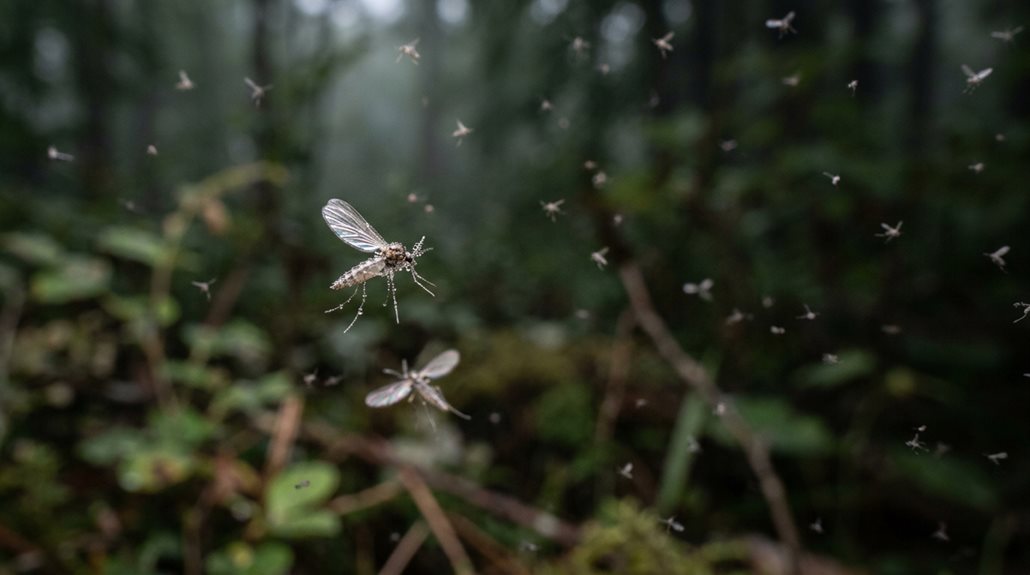
No-see-ums are tiny biting flies that can be hard to spot because of their small size.
To identify them, look for gray or dark gray color, compact bodies, and hairy wings with visible patterns.
They resemble miniature mosquitoes but are smaller.
Use a magnifying glass or microscope to see wing details, and note their quick movements and tiny size as key clues.
| Pest | Size | Appearance | Bites? | Key difference |
|---|---|---|---|---|
| No-see-um (biting midge) | Under 1/16 inch | Gray or dark, hairy patterned wings | Yes, painful | Smallest biter, passes through standard screens |
| Mosquito | 1/4 to 3/8 inch | Slender body, long proboscis | Yes | Much larger, visible, whining flight |
| Minute pirate bug | About 1/8 inch | Black and white, narrow head | Bites lightly; a nuisance | Beneficial predator often misidentified as no-see-ums |
| Chigger | Nearly invisible | Tiny red mite | Yes, intense itch | Bites at skin level, welts days later, no wings |
| Black fly | 1/8 to 1/4 inch | Stout body, humped back | Yes | Much larger, bites near running water |
If you are being bitten by something you cannot see, use a fine-mesh collector or a magnifier to confirm the culprit before choosing a control, then compare it with our guide to gnats, midges and mosquitoes.
Where Do No-See-Ums Breed, and How Do They Survive?
To find out where no-see-ums breed, start by examining moist, organic areas around your property.
Look for damp soil, mud, wet sand, marsh edges, and shoreline areas.
Check urban spots like over-irrigated mulch, plant pots, or drainage zones.
Focus on dark, damp places rich in decaying plant material, as these support egg laying and larval development. UF/IFAS research notes the eggs are laid on moist soil and cannot withstand drying out, and the larvae develop in muddy marsh and shoreline substrates rather than standing water.
What Do No-See-Ums Bites Look and Feel Like?
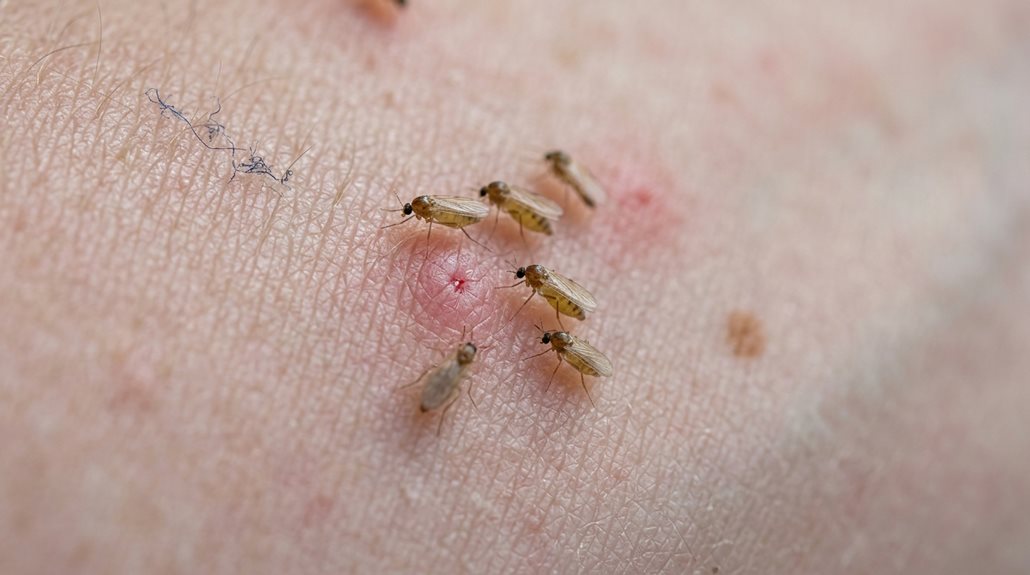
When identifying no-see-um bites, look for small, red, raised bumps on your skin. They often appear as tiny spots or papules, about 1/8 inch wide, with a visible puncture in the center.
Bites tend to occur in clusters on exposed skin, especially ankles, legs, and arms.
They often cause intense itching, burning, swelling, or blisters.
Are No-See-Ums Dangerous?
Are no-see-ums dangerous to humans? Mostly, they’re a nuisance and cause skin irritation rather than serious harm.
Their bites can lead to itching, swelling, and secondary infections from scratching. In rare cases, they can transmit viruses like Oropouche, but this is uncommon in the U.S., and CDC reports no local transmission so far.
Focus on avoiding bites and cleaning skin promptly to reduce risks.
How to Prevent No-See-Ums Bites and Infestations
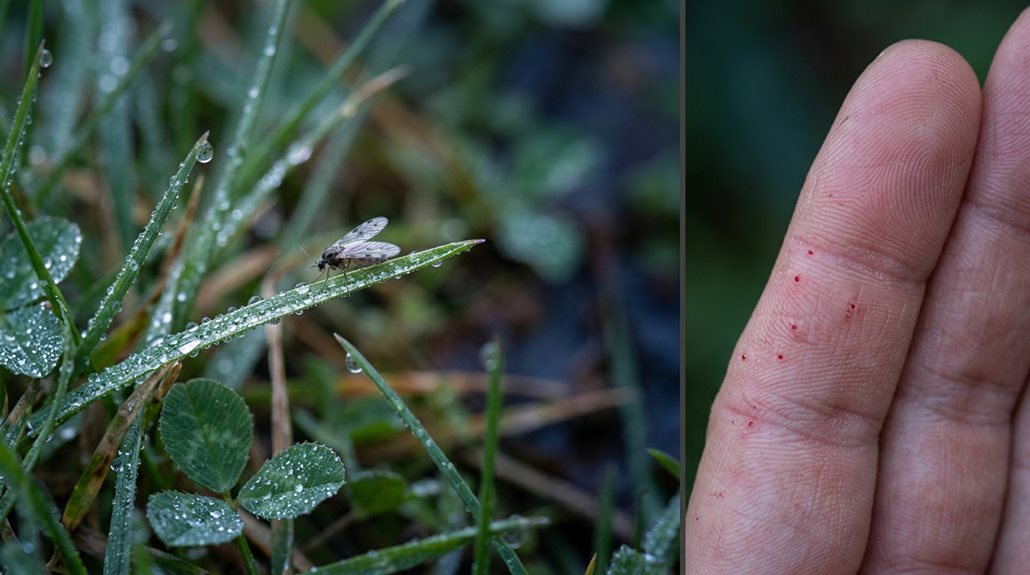
Preventing no-see-um bites starts with good planning and using effective products. Apply repellents containing DEET or picaridin on exposed skin and clothing, following label instructions.
Wear long, loose-fitting, light-colored, tightly woven clothing.
Keep doors and windows screened with small-mesh screens, and keep damp soil from staying wet for days, since larvae develop in moist soil and mud rather than standing water.
Limit outdoor activity during peak biting times and use fans or airflow indoors.
How to Get Rid of No-See-Ums Around Your Yard and Home
To get rid of no-see-ums around your yard and home, start by eliminating their breeding sites. Clear leaf litter and damp debris, thin dense vegetation, and let overwatered soil dry between irrigation cycles. Larvae develop in moist soil and mud rather than standing water, so persistently damp patches matter more than pooled water. If parts of the yard stay waterlogged after rain, fixing yard drainage problems is the most effective long-term control.
Repair leaky faucets and gutters, keep containers drained, and reduce moisture.
Regular mowing and yard cleanup eliminate resting spots, reducing adult populations effectively. Fall cleanup matters most; our fall lawn care checklist keeps the yard trimmed through the season.
Best Protective Gear and Repellents for No-See-Ums
To protect yourself from no-see-ums, start by wearing loose, long-sleeved shirts and long pants made of light-colored, thick fabric.
Add socks and closed shoes for extra coverage.
Use fine-mesh netting on hats and around your face and neck, and consider clothing with built-in mesh panels for extended outdoor time.
Combine this physical barrier with EPA-registered repellents like DEET or picaridin on your skin for maximum protection.
Protective Clothing Options
Wearing the right protective clothing is essential when dealing with no-see-ums. Choose long-sleeved shirts and full-length trousers made of tightly woven fabrics like nylon, polyester, or cotton.
Opt for light colors and loose fits. Cover all skin, seal openings at collars and cuffs, and wear hats with fine mesh netting.
Tuck trousers into socks for full coverage and protection.
Effective Repellent Choices
Choosing the right repellent is essential for effective protection against no-see-ums. Use EPA-registered repellents like DEET or picaridin at 20%–30% for lasting protection.
Apply evenly to all exposed skin, especially ankles and neck. Reapply as directed, especially with natural options like oil of lemon eucalyptus.
Combine with permethrin-treated gear for layered defense against bites.
Quick Tips to Soothe No-See-Ums Bites and Skin Irritation
When dealing with no-see-um bites and skin irritation, quick action can help reduce discomfort. Clean the area with soap and water, pat dry gently, and avoid harsh soaps.
Apply a cold compress for 10-20 minutes to reduce swelling and itching.
Use hydrocortisone cream or calamine lotion, and consider antihistamines for persistent itching.
Avoid scratching and tight clothing.
When to Seek Medical Help for Severe Reactions or Infections
If you notice signs of a severe allergic reaction or infection after a no-see-um bite, act quickly. Call 911 or seek emergency care immediately if you experience trouble breathing, swelling of the face or throat, dizziness, or loss of consciousness.
For infections, visit a healthcare provider if redness worsens, spreads, or if you develop fever, pus, or increasing pain. This guide offers general information, not medical advice; a healthcare provider should diagnose and treat individual reactions.
Sources
Breeding habits, disease risk and repellent guidance in this guide were checked against the following in November 2026:
UF/IFAS: biting midges, no-see-ums (EENY 349/IN626)
CDC: meet the midge (Oropouche and biting midges)
EPA: find the repellent that is right for you
Frequently Asked Questions
Can No-See-Ums Transmit Diseases to Humans?
No-see-ums generally don’t transmit diseases to humans in the U.S., but in some tropical regions, they can spread viruses like Oropouche or parasites. Your main risk is bites, not disease transmission, unless you’re in those specific areas.
Are No-See-Ums Attracted to Specific Types of Clothing or Colors?
You’re mostly attracted to dark-colored, tight-fitting clothing because it absorbs heat, creates contrast, and makes movement noticeable. Wearing light, loose, long clothing helps reduce attraction, but other factors like scent and heat still influence no-see-um bites.
How Long Do No-See-Um Bites Typically Last?
No-see-um bites usually last from 3 to 7 days, with itching fading first. Mild bites may clear in a few days, but more severe or allergic reactions can leave marks or swelling lasting up to two weeks or longer.
Do No-See-Ums Bite Indoors or Only Outside?
Yes, no-see-ums can bite indoors when they slip through small gaps or unscreened openings. They usually bite outdoors but may enter homes, especially through open doors, windows, or cracks, causing occasional indoor bites.
Are There Natural or Organic Methods to Control No-See-Um Populations?
Fans are the natural method with real evidence: no-see-ums are weak fliers, and moving air on porches and patios keeps them off you. Repellent plants, essential oil sprays, and vinegar traps have little proven effect on biting midges; EPA-registered repellents remain the dependable option.
