
Yard Drainage Problems: Causes, Fixes & Water Pooling Solutions
To fix yard drainage problems, first identify low spots where water pools and check for clogged gutters or improper grading. Mark high and low areas, then move soil from high to low spots, creating a slope away from your house. Install drainage options like French drains or dry creek beds if needed. Keep gutters clear and extend downspouts at least 4-6 feet from your foundation. Follow these steps, and you’ll improve water flow; more detailed solutions follow if you continue.
How Can I Tell If My Yard Has Drainage Problems?
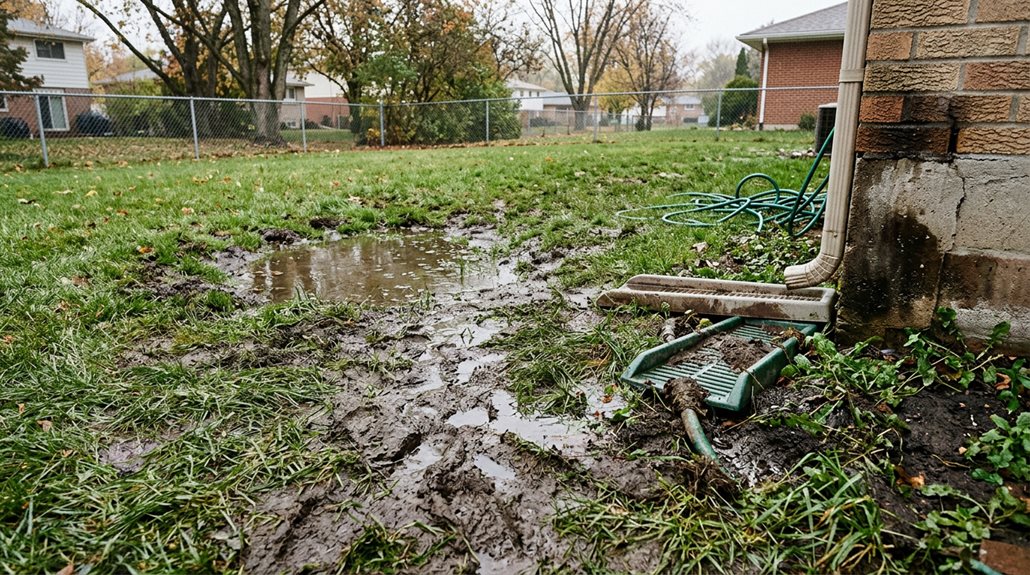
To determine if your yard has drainage problems, start by observing how water behaves after it rains.
Look for puddles that remain in the same spots for 24 to 48 hours.
Check low areas, near the foundation, and along slopes.
If water sticks around, pools form, or soil stays soggy, your yard likely has drainage issues that need fixing. Standing water and damp soil are also prime breeding ground for biting flies such as no-see-ums.
What Causes Common Drainage Issues in Lawns?
Many common drainage issues in lawns are caused by problems with the soil and land’s shape. Soil compaction from heavy traffic or construction reduces water infiltration.
Low spots or poor grading trap water, while clay-heavy or restrictive layers slow drainage.
Hard surfaces like driveways and roofs redirect runoff, overwhelming areas.
Guarantee proper grading, avoid compaction, and manage hardscaping to improve drainage. Long-term sogginess stresses and kills turf; our why is my lawn dying guide helps you tell drainage damage from disease and pests.
How to Regrade and Fix Your Yard for Better Water Flow
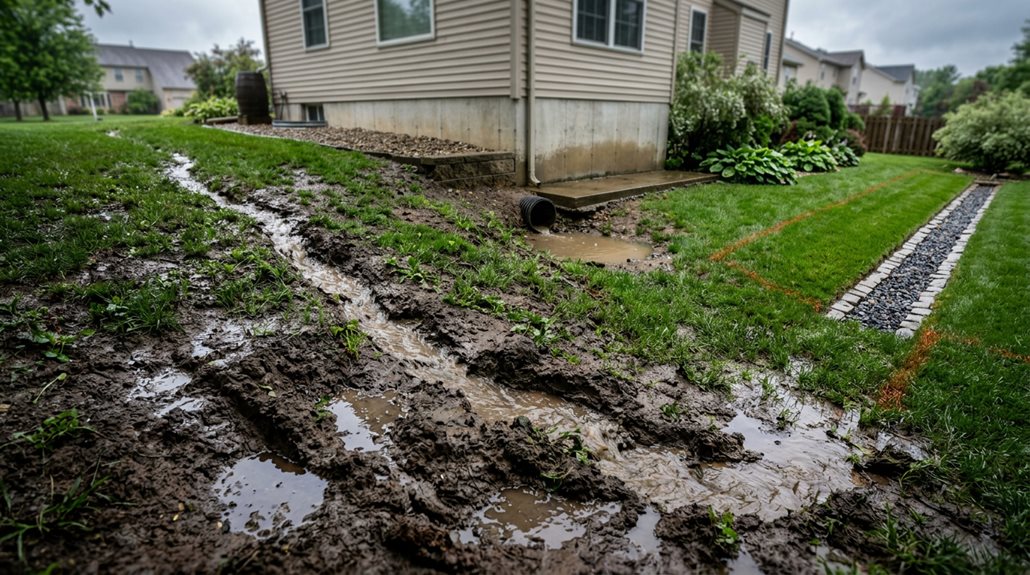
Regrading your yard starts with understanding the land’s shape. Mark high and low spots with stakes or a laser level.
Move soil from high areas to low, creating a smooth slope away from your foundation. Compact the soil after each lift, then finish with topsoil.
Make sure the slope directs water toward an outlet, like a storm drain or dry well, for proper drainage.
Effective Drainage Solutions: French Drains, Swales, and More
To address yard drainage problems effectively, you need to understand different systems like French drains, swales, and catch basins.
Each system requires specific design choices, such as proper slope, outlet placement, and materials like gravel or pipe.
Follow clear steps for installation to guarantee water moves away from your home safely and efficiently.
Types of Drainage Systems
When addressing yard drainage issues, choosing the right system can make a big difference in keeping your yard dry and preventing water damage.
Options include French drains, which move groundwater away; swales, gentle channels that slow runoff; surface drains and catch basins that collect surface water; dry creek beds for decorative flow; and downspout extensions to direct roof runoff.
| Solution | Best for | DIY cost | Effort |
|---|---|---|---|
| Downspout extensions | Pooling near downspouts and the foundation | $10 to $50 | Very easy |
| Regrading | Low spots and slopes that trap water | $0 to $300 (rental and topsoil) | Moderate |
| French drain | Persistent soggy areas and groundwater | $300 to $1,000 DIY | Moderate to heavy |
| Swale | Slow and redirect runoff across the yard | $100 to $500 | Moderate |
| Catch basin / dry well | Large surface puddles and overflow points | $200 to $800 | Moderate |
| Rain garden | Clay soil and chronic low spots | $200 to $1,000 | Moderate |
Start with the cheapest fix that matches your symptom: many pooling problems are solved by downspout extensions and a bit of regrading before you excavate anything.
Select based on your yard’s needs.
Design and Implementation
Designing and implementing effective drainage solutions requires careful planning and precise execution.
Start by evaluating water flow and grading your yard, ensuring at least 6 inches of fall over 10 feet away from the house.
Use swales or French drains to redirect runoff.
Dig trenches, install perforated pipes with filter fabric, and create outlets that safely discharge water away from structures.
How to Fix Gutter and Downspout Problems to Prevent Water Pooling
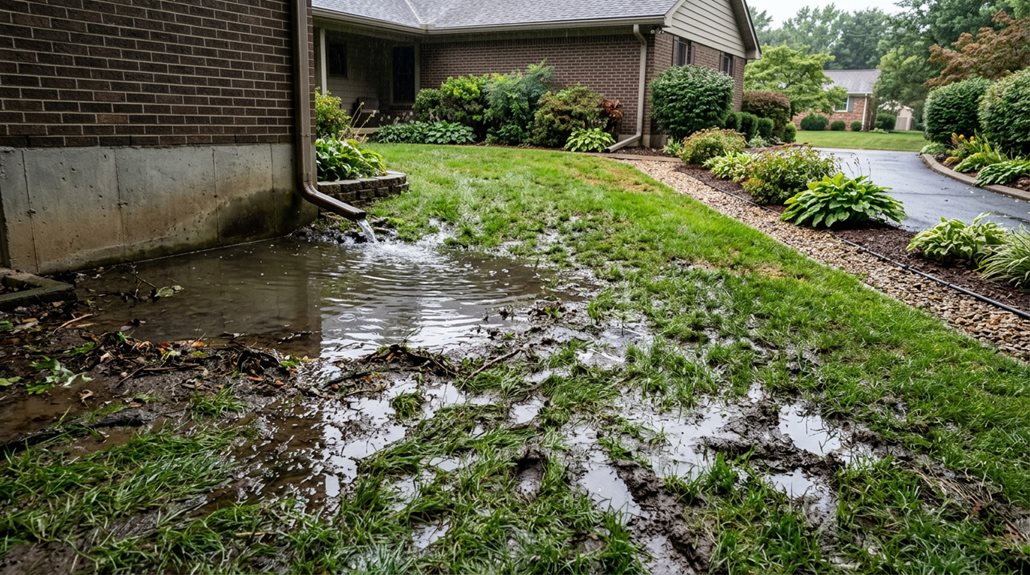
Clogged gutters and downspouts cause water pooling. To fix this, remove debris like leaves, twigs, and roof granules from gutters and clear downspout openings.
Check for sagging or loose supports and tighten or replace hangers.
Make sure downspouts extend at least 4 to 6 feet from your home, using extensions or underground pipes if needed.
Proper alignment directs water away from your foundation.
Maintenance Tips to Keep Your Yard Well-Drained
Regularly clear your gutters and downspouts to prevent clogs that can cause water to pool in your yard.
Monitor how water flows after storms and make adjustments to regrade areas that collect excess water.
Avoid overwatering your lawn, as too much moisture can worsen drainage issues and lead to soggy spots. Fall is the season to fix drainage before winter; our fall lawn care checklist includes aeration and the rest of the plan.
Regularly Clear Gutters
Cleaning your gutters regularly is essential for keeping your yard well-drained.
Remove leaves, twigs, and debris with gloves or a scoop, working toward the downspout.
Use a hose to rinse out remaining grit and check water flow.
Clear blockages in elbows and downspouts.
Regular cleaning prevents overflow, erosion, and standing water that can damage your yard’s drainage.
Monitor Water Flow
Monitoring how water flows across your yard is a key step in maintaining proper drainage. During rain, observe runoff from your house outward, noting where water starts, slows, or pools.
Walk the property, check for runoff toward structures, and document problem spots with photos.
Recheck dry conditions to spot grading or soil issues that are easier to see without saturation.
Avoid Overwatering
To prevent overwatering and keep your yard well-drained, adjust your watering habits based on soil type and weather. Once a fix is in place, the schedule has to change with it, so it is worth revisiting how often to water rather than running the same timer.
Water deeply, less often, and match your schedule to soil needs—more frequent for sandy, less for clay.
Use moisture meters or rain sensors, and avoid watering after rain or in wet soil.
Short, targeted watering prevents runoff and pooling. Damp, thatchy patches that never dry out can also grow ring-shaped fungi, covered in our guide to fairy rings in lawns.
When Should You Call a Professional for Drainage Help?
If you notice standing water that won’t drain away or soggy ground that stays wet long after it rains, it’s time to call in a professional.
Persistent pooling after storms, water near your foundation, or erosion signs indicate complex issues.
Contact an expert if DIY fixes don’t work, water threatens your home’s structure, or you see ongoing terrain damage.
Monitoring Your Yard for Long-Term Drainage Success
Regularly checking your yard helps guarantee your drainage system works well over time. Walk your yard after storms and in dry conditions to spot issues like pooling, erosion, or muddy spots.
Record water appearance and disappearance, take photos of problem areas, and verify drainage features are clear and functioning.
This routine helps you detect problems early and maintain effective drainage.
Sources
Drainage causes and fixes in this guide were checked against university extension publications, checked November 2026:
Colorado State University Extension: soil drainage
Frequently Asked Questions
Can Landscaping Changes Permanently Solve Yard Drainage Issues?
Landscaping changes can permanently solve some yard drainage issues, especially with regrading and proper drainage systems. However, they may not fix problems caused by high groundwater or heavy clay soil, which often need combined, ongoing solutions.
How Long Does It Take to See Results After Fixing Drainage Problems?
You’ll likely see results within hours to a few days after fixing drainage issues, especially with simple fixes like downspout extensions. More complex projects, like regrading or installing French drains, may take several days to show full improvement.
Are There Eco-Friendly Options for Improving Yard Drainage?
Yes, eco-friendly options include installing rain gardens, permeable pavers, dry wells, and swales. You redirect downspouts, improve soil with organic matter, and use native plants, all of which help manage water naturally and sustainably in your yard.
What DIY Methods Are Safe for Minor Drainage Repairs?
For minor drainage repairs, you can regrade small areas to slope away from your house, build shallow swales, clear gutters regularly, and aerate compacted soil. These methods are safe, simple, and effective for improving water flow naturally.
How Often Should Drainage Systems Be Inspected and Maintained?
You should inspect your drainage systems at least once a year, more often if there’s heavy debris or after storms. Regular maintenance like cleaning catch basins every six months keeps everything functioning properly and prevents water pooling issues.
